I have a confession to make. For years, I treated my husband’s type 2 diabetes diagnosis like a personal failure of my cooking. I thought “diabetic-friendly” meant bland, boiled, and boring. I spent months making dry chicken breasts and steamed broccoli, watching him pick at plates that looked like they came from a hospital cafeteria. It was heartbreaking, and honestly? It was terrible food.
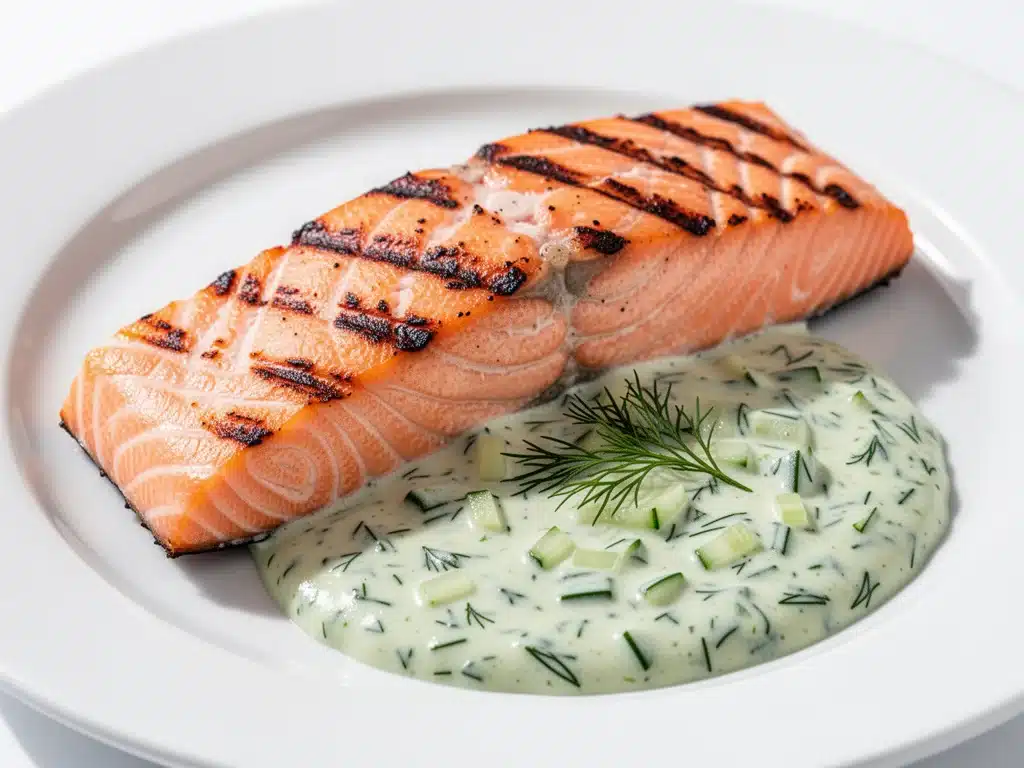
Then came the summer barbecue that changed everything. I was hosting a small gathering, and I wanted to serve something that felt special, not like a medical prescription. I threw together a batch of salmon, brushed it with a little lemon and olive oil, and whipped up a quick sauce with yogurt, dill, and cucumber. I was nervous. I didn’t know if it would hold up. But when my husband took that first bite, he didn’t just say it was “good for a diet meal.” He asked for the recipe so he could make it for his boss.
That night, I realized I’d been thinking about healthy eating all wrong. Healthy doesn’t have to mean sacrificing flavor. It just means being smarter about what fuels your body without stripping away the joy of eating. This diabetic-friendly grilled salmon with cucumber dill sauce is now a staple in our house. It’s high in omega-3s, low in carbs, and honestly? It’s so good that my non-diabetic friends ask me how I got the restaurant-quality flavor.
If you’re looking for a dinner that checks all the boxes—heart-healthy, blood-sugar-friendly, and genuinely delicious—you need to try this. I’ve tested it with different grills, different salmon cuts, and even a few sauce tweaks until it was perfect. It’s ready in 20 minutes, it looks stunning on the plate, and it proves that eating well can be the most impressive thing you bring to the table.
Why You’ll Love This Recipe
There are a dozen reasons I keep coming back to this salmon and sauce combo, but here’s why it’s earned a permanent spot in my weekly rotation:
Zero Guesswork for Blood Sugar — This meal is naturally low-glycemic. The healthy fats in the salmon slow down digestion, meaning no sugar spikes or crashes. I love knowing that I’m feeding my family food that supports their health without making them feel restricted.
Restaurant-Quality Flavor — The cucumber dill sauce is the star. It’s cool, creamy, and tangy, cutting through the richness of the fish perfectly. It tastes like something you’d pay $24 for at a bistro, but it costs a fraction of that and takes 5 minutes to mix.
Lightning Fast — You’re looking at about 10 minutes of prep and 10 minutes of cook time. If you’re rushing home from work and panic-sweating because you haven’t started dinner, this is your lifeline. It’s genuinely that quick.
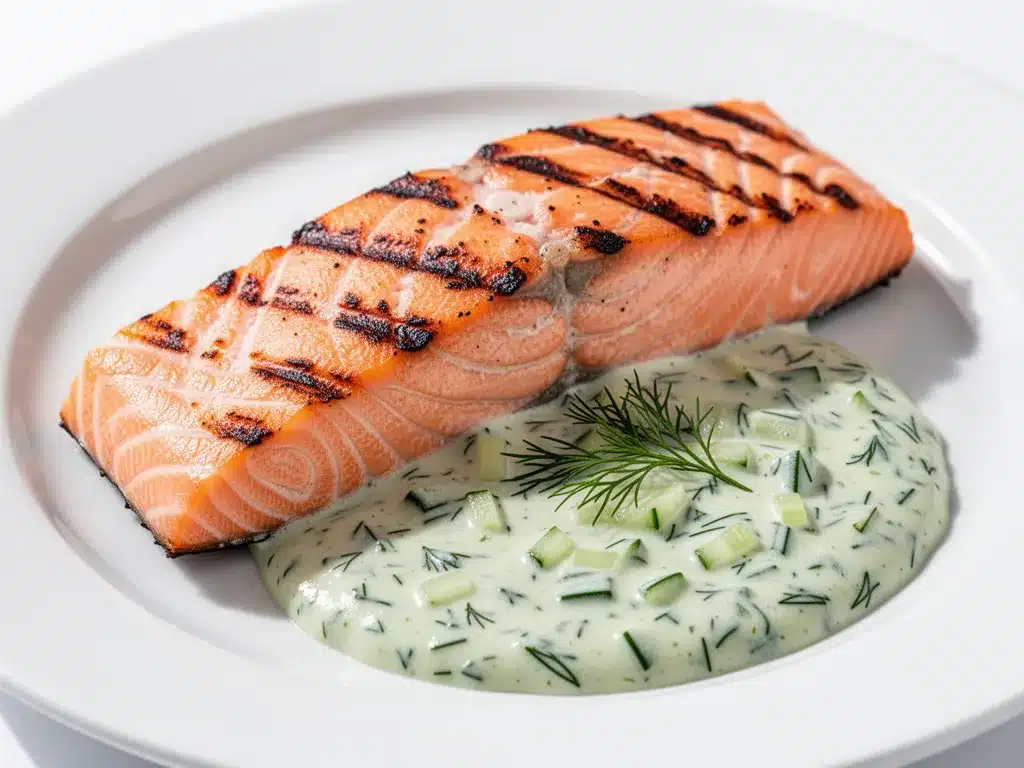
Impressively Elegant — The presentation is effortless. A fillet of golden, flaky salmon topped with a vibrant green sauce looks fancy enough for date night but is simple enough for a Tuesday. It feels like you put in way more effort than you actually did.
Brain-Boosting Nutrition — Salmon is loaded with omega-3 fatty acids, which are great for heart health and cognitive function. For anyone managing diabetes, protecting heart health is crucial, and this makes it easy and tasty.
This recipe isn’t just about “diet food.” It’s about realizing that healthy eating can be luxurious. It’s the kind of meal that makes people ask for seconds, not because they’re starving, but because they genuinely enjoyed it.
Ingredients You’ll Need
Here’s the beauty of this recipe: the ingredient list is short, fresh, and mostly things you probably already have. I’m particular about quality here, especially with the fish and the sauce, so pay attention to these details.
Salmon Fillets (4 pieces, about 6 ounces each) — Wild-caught salmon is ideal because it has a firmer texture and more robust flavor than farmed. If you can’t find wild, look for “sustainably raised” farmed salmon. Avoid the super cheap, pink, mushy stuff from the discount bin. You want firm, bright orange or red flesh.
Extra Virgin Olive Oil (2 tablespoons) — Use a good quality oil. It’s one of the main flavors here, so don’t use the cheap stuff you cook with for frying. This adds healthy monounsaturated fats.
Lemon (1 medium) — You’ll need both the zest and the juice. The zest adds aroma, and the juice adds brightness. Fresh lemon is non-negotiable here; bottled juice tastes metallic and flat.
Garlic (2 cloves, minced) — Fresh garlic only. I mince it finely so it adheres to the salmon without burning on the grill. If you’re worried about garlic burning, you can skip the garlic on the fish and put it all in the sauce instead.
Dried Dill (1 teaspoon) — Or 1 tablespoon of fresh dill. Dill is the classic pairing for salmon. If you don’t like dill, tarragon or chives work too, but dill is the traditional choice for a reason.
Sea Salt and Black Pepper — To taste. I use flaky sea salt for finishing if I have it.
For the Cucumber Dill Sauce:
Greek Yogurt (1 cup, plain, full-fat or 2%) — Full-fat Greek yogurt has a creamier texture and richer mouthfeel. If you’re strictly watching calories, 2% works, but 0% can taste watery. Don’t use sour cream; the texture is too heavy and tangy.
English Cucumber (1 medium, peeled and diced) — English cucumbers have fewer seeds and thinner skins, so they don’t make the sauce watery. If you only have regular cucumbers, peel them and scoop out the seeds with a spoon before dicing.
Lemon Juice (1 tablespoon) — Adds acidity to balance the creamy yogurt.
Minced Shallot or Red Onion (1 tablespoon, finely minced) — Adds a subtle oniony bite without being overpowering. If you’re sensitive to raw onion, you can skip this or use a tiny bit of chive blossoms.
White Wine Vinegar (1 teaspoon) — Adds a sharp tang that cuts through the fat. Apple cider vinegar works too, but it’s stronger and darker.
Optional: A pinch of cayenne pepper — Just a tiny pinch adds a hidden warmth that makes the sauce more complex.
Equipment Needed
You don’t need anything fancy for this. Here’s what I actually use:
Grill — Whether it’s a gas grill, charcoal grill, or indoor grill pan, you need direct high heat. I prefer gas for convenience, but charcoal adds a smoky flavor that’s amazing with salmon.
Grill Basket or Foil Packet — Salmon is delicate. It flakes easily. A grill basket keeps it intact, or you can make a foil packet with holes poked in the top to let smoke in while keeping the fish safe.
Mixing Bowl — Small bowl for the sauce.
Zester or Microplane — For getting that lemon zest without the bitter white pith.
Sharp Knife — For dicing the cucumber finely.
Spatula — A wide, thin spatula is best for flipping delicate fish. Fish spatulas have those little slots that help drain liquid and slide under the fillet easily.
How to Make It: Step-by-Step
Alright, let’s get cooking. This is straightforward, but there are a few tricks to keep the salmon moist and the sauce fresh.
Step 1: Prep the Sauce First (5 minutes)
Start with the sauce because it needs a little time to chill and let the flavors meld. In a small bowl, combine the Greek yogurt, diced cucumber, minced shallot, lemon juice, white wine vinegar, dried dill, and a pinch of salt. Stir well. Taste it. If it needs more tang, add a splash more lemon juice. Cover and put it in the fridge while you prep the fish. This step is crucial; it’s what makes the sauce taste cohesive rather than just mixed ingredients.
Step 2: Prep the Salmon (5 minutes)
Pat the salmon fillets dry with paper towels. This seems minor, but dry fish sears better and doesn’t stick. In a small bowl, whisk together the olive oil, minced garlic, lemon zest, salt, and pepper. Brush this mixture generously over both sides of the salmon fillets. Let them sit at room temperature for 10 minutes while your grill heats up. This helps the seasoning penetrate slightly.
Step 3: Heat the Grill
Preheat your grill to medium-high heat (about 400°F). If you’re using a gas grill, turn all burners to high, then turn them down to medium-high once hot. Clean the grates thoroughly with a grill brush, then oil them lightly with a paper towel dipped in oil (use tongs to hold the towel). This prevents sticking.
Step 4: Grill the Salmon (10-12 minutes)
Place the salmon fillets skin-side down (if skin-on) on the grill. If using a grill basket, place them in there. Close the lid. Do not touch the fish for the first 4 minutes. This allows a crust to form. After 4 minutes, check the bottom. If it releases easily from the grate, flip it. If it sticks, give it another minute. Once flipped, cook for another 4-6 minutes, depending on thickness. The salmon is done when it flakes easily with a fork and reaches an internal temperature of 145°F (though many chefs prefer 125-130°F for medium-rare, which is safer for moistness if you trust your thermometer).
Pro Tip: If you’re worried about the garlic burning on the fish, you can skip the garlic on the salmon and add it to the sauce instead. Garlic burns easily on high heat.
Step 5: Serve
Transfer the salmon to plates. Spoon a generous amount of the chilled cucumber dill sauce over the top. Garnish with a fresh dill sprig or a lemon wedge. Serve immediately with roasted asparagus or a simple green salad.
Expert Tips & Tricks
Here’s everything I’ve learned from making this dozens of times. These tips will save you from my early mistakes.
Don’t Overcook the Salmon — This is the #1 mistake. Salmon continues to cook after it’s off the heat. Pull it when it’s still slightly translucent in the very center. It will finish cooking on the plate. Overcooked salmon is dry and rubbery, and no sauce can fix that.
Chill the Sauce — The contrast between warm, flaky salmon and cool, creamy sauce is what makes this dish sing. If you serve the sauce at room temp, it loses its refreshing quality. Keep it in the fridge until the last second.
Use a Grill Basket if You’re a Beginner — Flipping delicate fish on a grill grate is tricky. A grill basket is a game-changer. It holds the fish together and makes flipping effortless. I use one for this recipe almost every time.
Drain the Cucumber — Cucumbers have high water content. If you dice them and mix them straight into the yogurt, the sauce can get watery. I recommend salting the diced cucumber, letting it sit for 10 minutes, then squeezing out excess liquid with a paper towel before mixing. This keeps the sauce thick and creamy.
Room Temperature Fish — Take the salmon out of the fridge 10-15 minutes before grilling. Cold fish hitting a hot grill can cook unevenly. Room temp fish cooks more uniformly.
Variations & Substitutions
Once you’ve mastered the base, here’s how you can mix it up. I’ve tried all of these.
Herb Swap — No dill? Try fresh tarragon, chives, or even mint. Mint and cucumber are a classic combo that works surprisingly well here.
Creamier Sauce — For a richer sauce, swap half the Greek yogurt for sour cream or crème fraîche. It’s less “diet” but tastes indulgent.
Spicy Kick — Add a diced jalapeño or a dash of hot sauce to the cucumber mixture. It adds a nice heat that pairs with the cool yogurt.
Avocado Twist — Mash half an avocado into the sauce for extra creaminess and healthy fats. It turns it into a creamy green dip.
Gluten-Free — This recipe is naturally gluten-free. Just ensure your Greek yogurt and other ingredients are certified GF if you have celiac disease.
Dairy-Free Option — Swap Greek yogurt for coconut yogurt (full-fat). It’s tangier and thicker, which works well. Add a splash of lime juice to balance the coconut flavor.
Serving & Storage
How to Serve: — I usually serve this with roasted asparagus, grilled zucchini, or a quinoa salad. A simple arugula salad with lemon vinaigrette is also perfect because it’s light and doesn’t compete with the salmon.
Leftovers: — Store leftover salmon and sauce in separate airtight containers in the fridge for up to 2 days. The salmon is great cold or room temperature the next day (think salmon salad). The sauce thickens in the fridge; stir in a teaspoon of water or lemon juice to loosen it before serving.
Freezing: — I don’t recommend freezing this. The texture of the salmon changes, and the yogurt-based sauce can separate and become grainy when thawed. It’s best fresh.
Nutrition Information
I’m not a nutritionist, but here’s the breakdown if you’re tracking. This is per serving (1 fillet + ¼ cup sauce).
Calories: 320
Protein: 34g
Carbs: 6g
Fiber: 1g
Sugar: 3g
Fat: 18g
Saturated Fat: 4g
Cholesterol: 85mg
Sodium: 280mg
This meal is high in protein and healthy fats, with very low carbs. It’s perfect for blood sugar management. The omega-3s from the salmon are a bonus for heart health.
Final Thoughts
So that’s my go-to diabetic-friendly grilled salmon with cucumber dill sauce! I know I’ve talked a lot about how this changed my perspective on healthy cooking, but that’s because it really did. It took me from feeling guilty about every meal to feeling confident and creative in the kitchen.
This recipe has saved weeknight dinners more times than I can count. It’s my answer to “what’s for dinner” when I want something light but satisfying. My husband is happy, my friends are impressed, and I’m happy because I’m not stressed about cooking something complicated.
Make it yours! Try different herbs, add some chili flakes, or serve it over different veggies. The best recipes are the ones you adapt to your family’s tastes. If you make this, drop a comment and let me know what you think! I love hearing how recipes turn out in your kitchen. And if something doesn’t work, tell me that too—I’m here to help troubleshoot.
Happy cooking! And I hope your kitchen smells half as good as mine does right now.
Frequently Asked Questions
Can I use canned salmon instead of fresh?
You can, but the texture and flavor will be different. Canned salmon is softer and saltier. If you use it, drain it well and mix it with the sauce to make a salmon salad instead of grilling fillets. It’s a different dish, but still healthy and delicious.
Why did my sauce turn out watery?
Usually, this happens because the cucumber released too much water into the yogurt. To fix this, salt the diced cucumber, let it sit for 10 minutes, then squeeze out the liquid with a paper towel before mixing. Also, make sure you’re using thick Greek yogurt, not regular yogurt or sour cream, which are thinner.
Can I make this on a stovetop instead of grilling?
Absolutely. Use a non-stick skillet or cast-iron pan. Heat a little oil over medium-high heat and cook the salmon for 4-5 minutes per side. The texture won’t be smoky, but the flavor will still be great. Just be gentle when flipping.
Is this recipe truly safe for diabetics?
This recipe is designed to be low-carb and high-protein, which helps manage blood sugar. However, everyone’s body reacts differently. It’s always best to monitor your blood sugar after trying new foods and consult with your healthcare provider or a dietitian for personalized advice. This meal is a great option, but individual needs vary.
Can I prep the sauce ahead of time?
Yes! In fact, it tastes better if you make it a few hours ahead. The flavors meld together. Just keep it covered in the fridge. It will last up to 2 days.
What sides go well with this?
I love roasted asparagus, grilled zucchini, or a simple quinoa salad. A light arugula salad with lemon vinaigrette is also perfect. Avoid heavy starches like rice or pasta if you’re watching carbs.
Pin This Recipe!
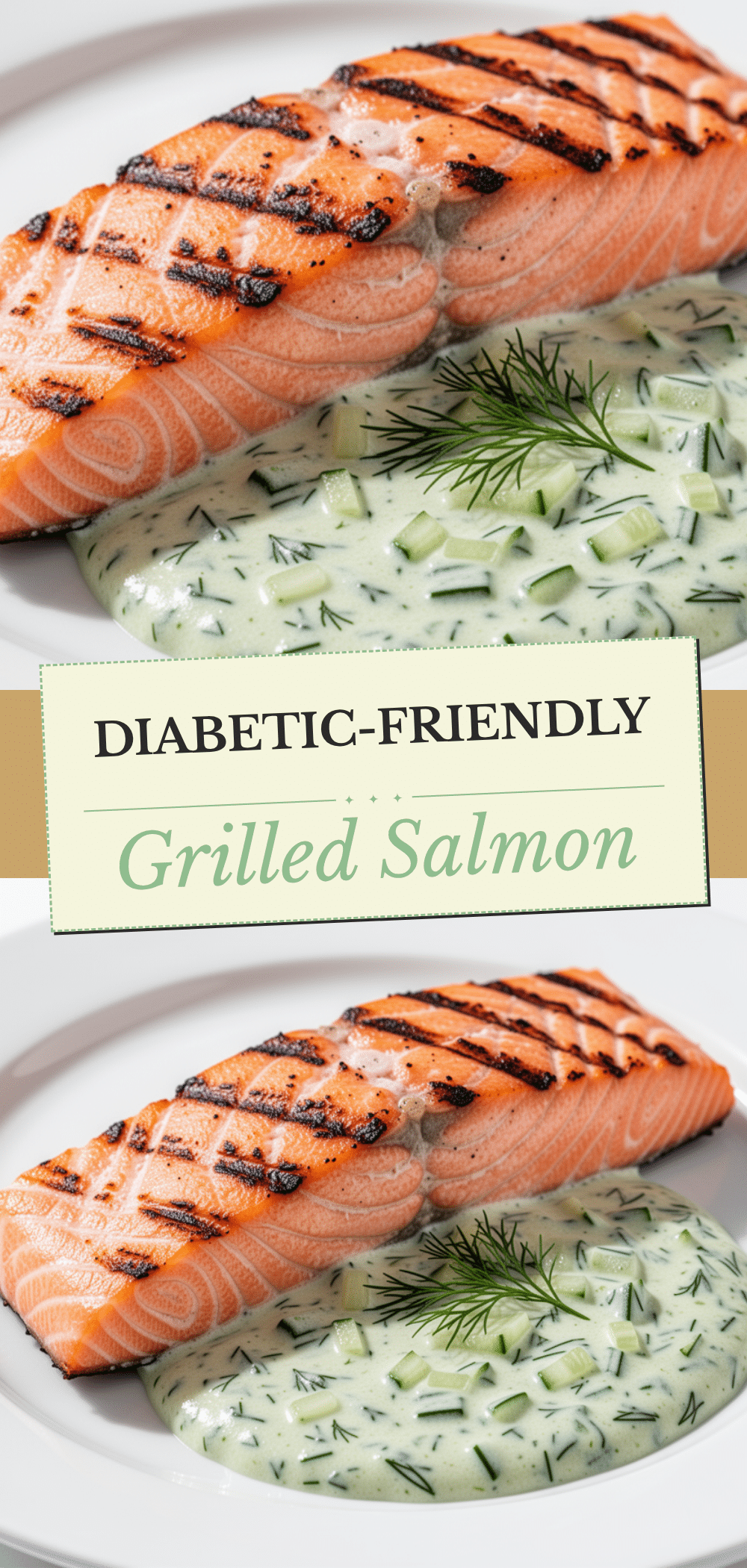
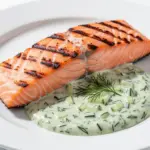
Diabetic-Friendly Grilled Salmon with Cucumber Dill Sauce
- Total Time: 20 minutes
- Yield: 4 servings 1x
Description
A quick, heart-healthy, and low-carb grilled salmon dish topped with a cool, creamy cucumber dill sauce. This recipe is designed to be blood-sugar-friendly while delivering restaurant-quality flavor in just 20 minutes.
Ingredients
- 4 salmon fillets (about 6 ounces each, wild-caught preferred)
- 2 tablespoons extra virgin olive oil
- 1 medium lemon (zest and juice)
- 2 cloves garlic, minced
- 1 teaspoon dried dill (or 1 tablespoon fresh dill)
- Sea salt and black pepper to taste
- 1 cup plain Greek yogurt (full-fat or 2%)
- 1 medium English cucumber, peeled and diced
- 1 tablespoon lemon juice
- 1 tablespoon minced shallot or red onion
- 1 teaspoon white wine vinegar
- Pinch of cayenne pepper (optional)
Instructions
- In a small bowl, combine Greek yogurt, diced cucumber, minced shallot, 1 tablespoon lemon juice, white wine vinegar, dried dill, and a pinch of salt. Stir well, taste, and adjust seasoning if needed. Cover and refrigerate to let flavors meld.
- Pat salmon fillets dry with paper towels. In a separate small bowl, whisk together olive oil, minced garlic, lemon zest, salt, and pepper. Brush this mixture generously over both sides of the salmon fillets. Let sit at room temperature for 10 minutes.
- Preheat grill to medium-high heat (approx. 400°F). Clean grates thoroughly and oil them lightly with a paper towel dipped in oil to prevent sticking.
- Place salmon fillets skin-side down on the grill (or in a grill basket). Close the lid and do not touch for 4 minutes to allow a crust to form.
- Check if the salmon releases easily from the grate. If so, flip carefully. Cook for another 4-6 minutes until the salmon flakes easily with a fork and reaches an internal temperature of 145°F (or 125-130°F for medium-rare).
- Transfer salmon to plates. Spoon a generous amount of the chilled cucumber dill sauce over the top. Garnish with fresh dill or a lemon wedge and serve immediately.
Notes
For the best sauce texture, salt the diced cucumber and let it sit for 10 minutes, then squeeze out excess liquid with a paper towel before mixing. Do not overcook the salmon; it continues to cook after being removed from the heat. The sauce can be made ahead and stored in the fridge for up to 2 days. Leftover salmon is best eaten cold or at room temperature.
- Prep Time: 10 minutes
- Cook Time: 10 minutes
- Category: Main Course
- Cuisine: American
Nutrition
- Serving Size: 1 fillet with ¼ cup
- Calories: 320
- Sugar: 3
- Sodium: 280
- Fat: 18
- Saturated Fat: 4
- Carbohydrates: 6
- Fiber: 1
- Protein: 34
Keywords: diabetic-friendly, grilled salmon, cucumber dill sauce, low carb, healthy dinner, omega-3, heart-healthy, quick meals, gluten-free, dairy-free option