I still remember the morning of my son’s first day of kindergarten. I had spent the night before panicking, trying to remember if I bought eggs, if the bread would be fresh, if I had enough coffee. The reality hit me at 6:30 AM: I had nothing ready, my husband was running late, and my son was staring at the clock like it was his enemy. We ended up eating granola bars in the car, which is not exactly the “start your day right” vibe I was going for.
That was the day I decided we needed a breakfast that didn’t require me to be a human alarm clock. Enter the crispy sausage and cheddar breakfast casserole. It’s not just a recipe; it’s my peace treaty with the morning rush. I’ve made this dish at least once every two weeks for the last three years. It’s become the anchor of our weekend brunches and the savior of busy Tuesday mornings.
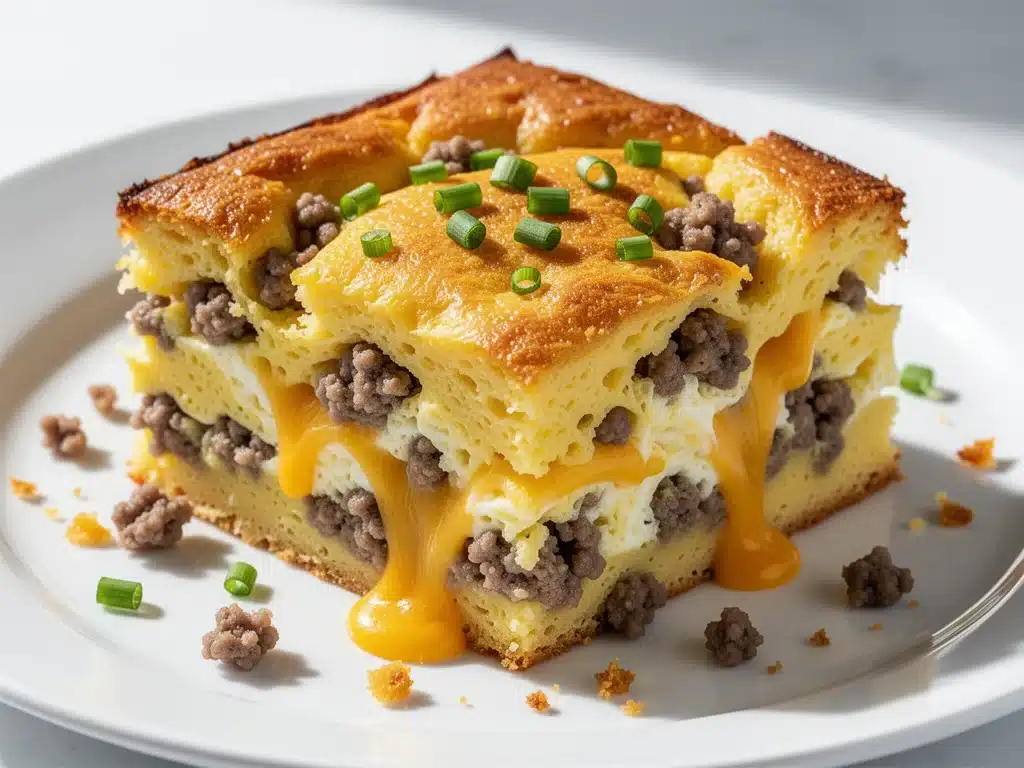
Here’s the thing about this crispy sausage and cheddar breakfast casserole: it’s not your average, soggy, gray egg bake from the 90s. I’ve tested dozens of versions—some too dry, some too greasy, some that tasted like they were made with cardboard. This version? It’s golden, cheesy, and has that perfect savory crunch from the sausage and the crust. It’s the kind of dish that makes people ask for seconds, which is rare for breakfast.
I learned this technique while trying to feed a house full of hungry teenagers. They don’t want toast. They don’t want oatmeal. They want something substantial, salty, and cheesy. This crispy sausage and cheddar breakfast casserole delivers on all fronts. Plus, the best part? You can assemble it the night before. So while everyone else is sleeping, you’re already winning the morning.
Why You’ll Love This Breakfast Casserole
There are about ten reasons I keep coming back to this recipe, but let’s be real—we all have limited time and energy in the morning. Here’s why this crispy sausage and cheddar breakfast casserole has earned its spot in our weekly rotation.
Make-Ahead Magic — Seriously, this is the game-changer. I assemble the entire dish the night before, cover it with foil, and pop it in the fridge. In the morning, I just pull it out and put it in the oven. No chopping, no scrambling, no stress. It’s like having a personal chef who works while you sleep.
Actually Crispy — Most breakfast casseroles turn out mushy. Not this one. By using day-old bread and cooking it low and slow, the edges get crispy and golden while the center stays fluffy. It’s a texture contrast that keeps everyone coming back.
Feeds an Army — This recipe easily feeds 6-8 people. Whether it’s a family brunch, a holiday gathering, or just a really hungry weeknight (yes, we eat it for dinner sometimes), it scales up without losing its quality. I’ve made this for holiday mornings and it disappears in minutes.
Picky-Eater Approved — My youngest son usually picks at everything. But this? He loves it. The savory sausage and melted cheddar are universal languages. Even my dad, who claims he “doesn’t have much of an appetite in the morning,” asks for a second plate.
Budget-Friendly — Eggs, bread, sausage, cheese. These are pantry staples and grocery store basics. You can make this for a fraction of the cost of a diner breakfast. I calculate it at about $1.50 per serving, which is a steal for a hot, homemade meal.
This is my go-to when I want to feel like a hero without spending three hours in the kitchen. It’s reliable, delicious, and makes the house smell amazing while everyone else is still waking up.
Ingredients You’ll Need
Here’s the best part: you probably have most of these ingredients already. This isn’t a recipe that requires a special trip to three different specialty stores. It’s simple, honest food.
For the Base
Day-old bread (1 loaf / about 450g) — This is crucial. Fresh bread will turn to mush. I use a hearty white or wheat loaf, torn into 1-inch cubes. Let it sit out uncovered overnight to stale, or toast it lightly in the oven for 10 minutes to dry it out. Sourdough works great too if you want a tangier flavor.
Eggs (8 large) — Room temperature eggs mix more evenly into the custard. I crack them into a large measuring cup first to check for shells, then whisk them with the milk.
Whole milk (2 cups / 480ml) — Full-fat milk gives the best richness. You can use half-and-half for an extra creamy version, but whole milk is perfect for balance. If you’re lactose-intolerant, almond milk works but the texture will be slightly less creamy.
Butter (2 tablespoons / 30g) — For greasing the baking dish. I use unsalted butter so I can control the salt level. If you don’t have butter on hand, a spray of cooking oil works too.
For the Flavor
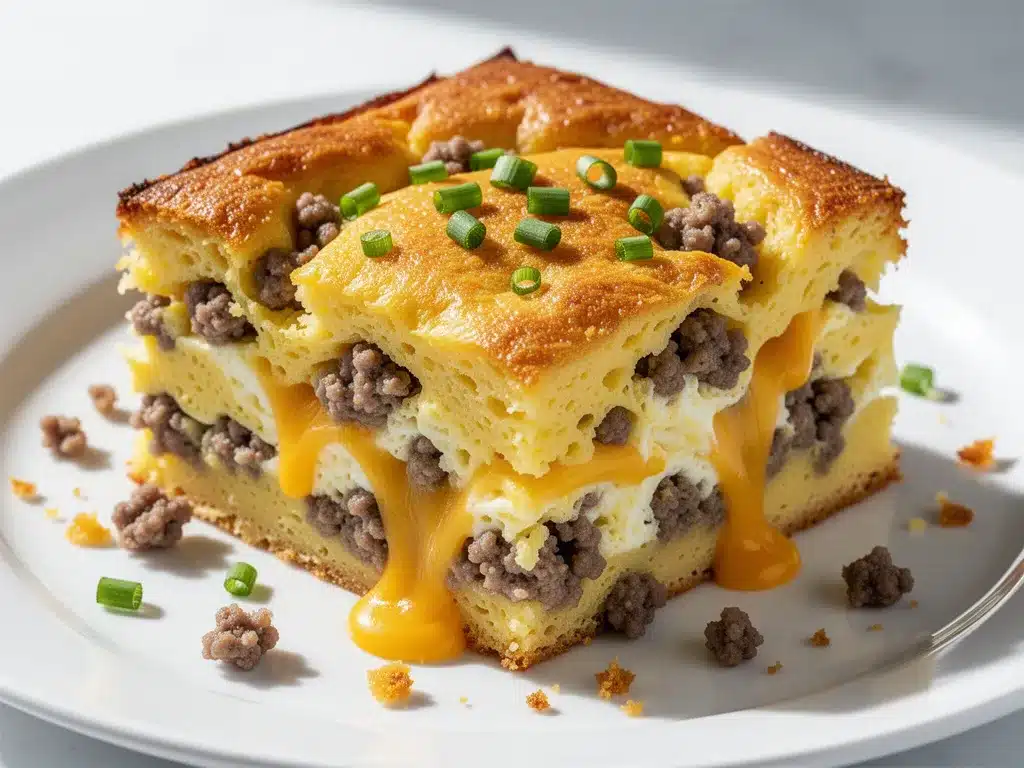
Breakfast sausage (1 pound / 450g) — I prefer mild pork sausage for the classic flavor, but you can use spicy if you like a kick. Remove it from the casings if it’s links. You want it browned and crumbled. If you’re watching carbs, you can substitute with cooked turkey sausage, but pork has the best fat content for flavor.
Sharp cheddar cheese (2 cups / 200g, shredded) — Buy the block and shred it yourself. Pre-shredded cheese has anti-caking agents that prevent it from melting smoothly. I use sharp cheddar because it has a stronger flavor that stands up to the sausage. Colby Jack is a good mild alternative.
Onion (1 medium yellow onion, diced) — Sweetens as it cooks and adds depth. I sauté it with the sausage. If you’re sensitive to onions, you can skip it, but I don’t recommend it. It’s a key flavor builder.
Dried basil (1 teaspoon) — Adds an herbal note that pairs perfectly with cheddar. You can use fresh basil, but add it at the end to prevent it from wilting into oblivion. I keep dried basil in my pantry for convenience.
Garlic powder (½ teaspoon) — Not fresh garlic, which can burn. Garlic powder distributes evenly and adds a savory background note. If you only have fresh garlic, mince 1 clove finely and add it with the onion.
Salt and black pepper — To taste. Remember, the sausage and cheese are already salty, so go easy on the salt. I usually add a generous crack of black pepper for warmth.
Optional Add-ins
Bell peppers (½ cup, diced) — Adds color and a slight sweetness. I use red or green peppers. Sauté them with the onions.
Bacon bits (½ cup, cooked and crumbled) — For extra smokiness. I use real bacon, not the powdered stuff. This is my husband’s favorite addition.
Hot sauce (1 tablespoon) — Stirred into the egg mixture for a hidden kick. I use Frank’s RedHot or my homemade hot sauce.
Equipment Needed
You don’t need fancy equipment for this. Here’s what I actually use in my kitchen.
9×13 inch baking dish — I use a glass Pyrex dish. It heats evenly and lets me see the bottom browning. Ceramic works too, but glass is easier to clean. Make sure it’s buttered well.
Large skillet — 12-inch cast iron or stainless steel. I use this to brown the sausage and cook the onions. Cast iron retains heat well, which helps get that nice crust on the sausage.
Large mixing bowl — Something wide so you can whisk the eggs and milk easily. I use a 4-quart bowl.
Whisk — Standard wire whisk. No fancy gadgets needed.
Measuring cups and spoons — Basic stuff. I keep a set on my counter for easy access.
Aluminum foil — For covering the casserole if it browns too quickly. I always have a roll handy.
Knife and cutting board — For tearing the bread and dicing the onion. Sharp knife makes life easier.
Grater — Box grater for the cheese. Or a microplane if you want fine shreds that melt faster.
How to Make It: Step-by-Step
Alright, let’s make this! I’m walking you through exactly how I do it, including the little tricks I’ve picked up over the years.
Step 1: Prep the Bread (5 minutes)
If your bread is fresh, tear it into 1-inch cubes and spread them out on a baking sheet. Let them sit uncovered for an hour, or toast at 300°F for 10 minutes. You want them dry but not hard as rocks. Once they’re stale enough, toss them into your large baking dish. Arrange them in an even layer. Don’t worry if it looks like a mountain; it will settle down.
Step 2: Cook the Sausage and Onions (10 minutes)
Heat your large skillet over medium heat. Add the sausage, breaking it up with a wooden spoon as it cooks. Cook until browned and no pink remains, about 5-7 minutes. Drain excess fat if there’s a lot, but leave a little for flavor. Add the diced onion to the skillet and cook for another 3-4 minutes until soft and translucent. Stir in the garlic powder and dried basil. Remove from heat.
Step 3: Mix the Egg Custard (5 minutes)
In your large mixing bowl, whisk the eggs until well beaten. Add the milk, salt, and pepper. Whisk until the mixture is uniform. If you’re adding hot sauce or bell peppers, stir them in now. The mixture should look like thin, yellow liquid.
Step 4: Assemble the Casserole (5 minutes)
Pour the egg mixture evenly over the bread cubes. Use a spatula to gently press down on the bread, ensuring every piece gets soaked. Let it sit for 10 minutes. This is the most important step—it allows the bread to absorb the liquid so you don’t end up with dry spots. If you’re making this ahead, cover it tightly with plastic wrap or foil and refrigerate now.
Step 5: Bake (30-35 minutes)
Preheat your oven to 350°F (175°C). If the casserole has been in the fridge, let it sit at room temperature for 20 minutes while the oven heats. Sprinkle the shredded cheddar cheese evenly over the top. Bake for 30-35 minutes, until the top is golden brown and the center is set (a knife inserted in the center should come out clean). If the top is browning too fast, cover loosely with foil for the last 10 minutes.
Step 6: Rest and Serve (10 minutes)
Let the casserole rest for 10 minutes before cutting. This allows it to set so it holds together when you serve. Cut into squares and serve warm. Top with extra cheddar or fresh herbs if you like.
Expert Tips & Tricks
Here’s everything I’ve learned from making this dozens of times. These tips will save you from my mistakes.
Don’t Skip the Stale Bread — This is the #1 tip. Fresh bread absorbs too much liquid and turns into a wet sponge. Stale bread acts like a sponge that holds its structure. If you’re in a rush, toast fresh bread for 15 minutes at 300°F.
Drain the Sausage Fat Wisely — You want flavor, not grease. Drain most of the fat, but leave about 1 tablespoon in the pan to cook the onions. This adds a smoky depth that pure oil can’t match.
Let It Soak — The 10-minute rest before baking is non-negotiable. I’ve rushed this step before and ended up with dry bread cubes floating in liquid. Patience pays off.
Shred Your Own Cheese — Pre-shredded cheese contains cellulose, which prevents melting. Your casserole will have a smoother, creamier texture if you shred a block of cheddar yourself. It takes 3 minutes and makes a huge difference.
Room Temperature Eggs — Cold eggs can cool down the custard mixture, leading to uneven cooking. Take them out of the fridge 15 minutes before you start.
Common Mistakes:
- Mistake: Casserole is watery. Fix: You didn’t let it rest long enough, or you used fresh bread. Next time, ensure the bread is dry and let it soak.
- Mistake: Top is burnt. Fix: Your oven runs hot. Cover with foil halfway through baking.
- Mistake: Center is runny. Fix: Bake for 5 more minutes. The center should be set, not jiggly.
Variations & Substitutions
Once you’ve nailed the basic version, here’s how you can mix it up. I’ve tried all of these.
Ham and Swiss Version — Swap sausage for diced ham and cheddar for Swiss cheese. Add caramelized onions for sweetness. This is a classic combo that feels fancy.
Vegetarian Version — Skip the sausage and add extra veggies. Sautéed mushrooms, spinach, and bell peppers work great. Add a teaspoon of smoked paprika for depth.
Spicy Kick — Use spicy sausage and add diced jalapeños to the egg mixture. Top with hot sauce when serving. Perfect for those who like heat.
Gluten-Free — Use gluten-free bread. Make sure it’s sturdy enough to hold up to the liquid. Some GF breads are more fragile, so toast them well. The rest of the ingredients are naturally GF.
Dairy-Free — Use plant-based milk and dairy-free cheese shreds. Note that DF cheese doesn’t melt the same way, so the texture will be different. It’s still tasty, just not as gooey.
Protein Boost — Add cooked bacon bits or crumbled turkey bacon. I love the smoky flavor it adds. You can also add a can of drained white beans for extra fiber.
Serving & Storage
How to Serve:
I usually serve this straight from the baking dish at the table. It looks rustic and stays warm. Pair it with fresh fruit, like berries or melon, to balance the richness. A simple green salad with vinaigrette is also great if you want something lighter.
Leftovers:
Store leftovers in an airtight container in the fridge for up to 4 days. The casserole actually tastes better the next day as the flavors meld. Reheat in the microwave for 1-2 minutes or in the oven at 350°F for 15 minutes to crisp up the edges.
Freezing:
You can freeze this casserole, but the texture changes slightly. Assemble it fully, then freeze it unbaked. Wrap tightly in foil and plastic. Thaw in the fridge overnight and bake as directed. If you freeze it baked, reheat gently to avoid drying it out. I prefer to make it fresh, but freezing is a good option for meal prep.
Meal Prep Tip:
Make two casseroles on Sunday. Freeze one unbaked. This way, you always have a breakfast ready to go. It’s a lifesaver during busy weeks.
Nutrition Information
I’m not a nutritionist, but here’s the breakdown if you’re tracking. This is per serving (based on 8 servings).
- Calories: 380
- Protein: 22g
- Carbs: 28g
- Fiber: 2g
- Sugar: 4g
- Fat: 18g
- Saturated Fat: 8g
- Cholesterol: 180mg
- Sodium: 650mg
It’s hearty and filling. If you’re watching calories, you can use egg whites instead of whole eggs, or reduce the cheese by half. But honestly? This is comfort food. Enjoy it as is.
Final Thoughts
So that’s my go-to crispy sausage and cheddar breakfast casserole! I’ve probably talked your ear off at this point, but when you make a recipe this often, you have a lot to say about it.
This has saved our mornings more times than I can count. It’s my answer to “what’s for breakfast?” when I’m tired, don’t want to cook, but still want something delicious. My kids are happy, my husband’s happy, and I’m happy because I’m not stressed.
Make it yours! Try different cheeses, add veggies, or swap the sausage. The best recipes are the ones you adapt to your family’s tastes.
If you make this, drop a comment and let me know what you think! I love hearing how recipes turn out in your kitchen. And if something doesn’t work, tell me that too—I’m here to help troubleshoot.
Happy cooking! And I hope your kitchen smells half as good as mine does right now.
Frequently Asked Questions
Can I use fresh bread instead of stale bread?
You can, but it’s not recommended. Fresh bread will absorb too much liquid and become mushy. If you must use fresh bread, toast it in the oven at 300°F for 10-15 minutes to dry it out. Let it cool before assembling.
Can I make this ahead and bake it in the morning?
Yes! This is the best part. Assemble the casserole the night before, cover it tightly with plastic wrap or foil, and refrigerate. In the morning, take it out, let it sit for 20 minutes while the oven heats, then bake. You may need to add 5-10 minutes to the baking time if it’s cold from the fridge.
What kind of sausage works best?
I prefer mild pork breakfast sausage for the classic flavor. You can use spicy sausage if you like heat. Avoid Italian sausage unless you want a different flavor profile—it has fennel and other herbs that change the dish. Remove sausage from casings if it’s links.
Can I freeze this casserole?
Yes, you can freeze it unbaked. Assemble it, wrap tightly in foil and plastic, and freeze for up to 3 months. Thaw in the fridge overnight and bake as directed. If you freeze it baked, reheat gently to avoid drying it out.
Why is my casserole watery?
This usually happens if you used fresh bread that didn’t absorb enough liquid, or if you didn’t let it rest long enough before baking. Make sure your bread is dry and let the assembled casserole sit for at least 10 minutes before baking.
Can I add vegetables?
Absolutely! Sautéed onions, bell peppers, mushrooms, and spinach work great. Add them when you cook the sausage. Just make sure to drain any excess liquid from the vegetables to prevent a watery casserole.
How do I reheat leftovers?
Reheat in the microwave for 1-2 minutes, or in the oven at 350°F for 15 minutes. For the best texture, reheat in the oven to crisp up the edges. If it looks dry, add a splash of milk before reheating.
Pin This Recipe!
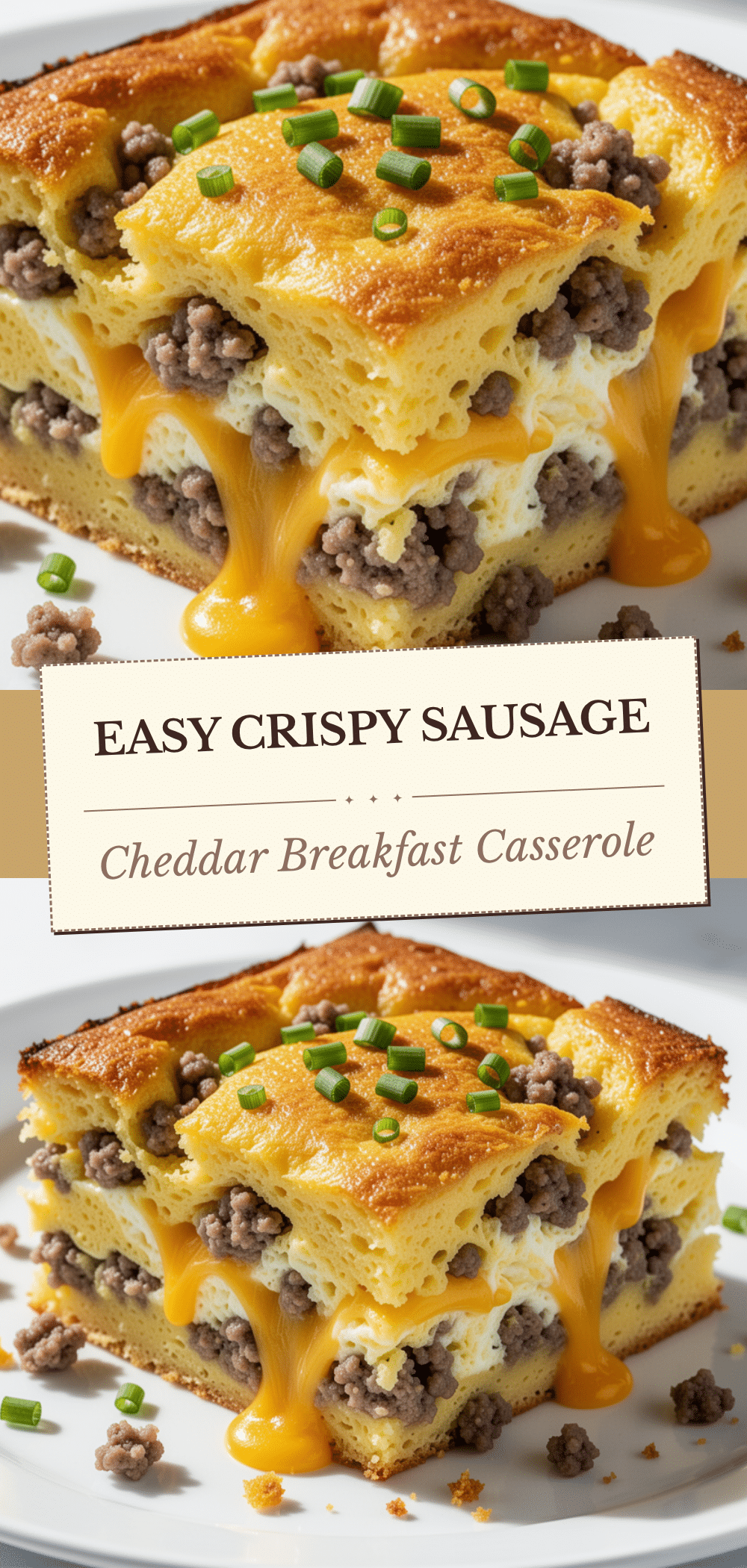

Crispy Sausage and Cheddar Breakfast Casserole
- Total Time: 50 minutes
- Yield: 8 servings 1x
Description
A make-ahead breakfast casserole featuring crispy sausage, sharp cheddar cheese, and day-old bread. This savory dish is perfect for feeding a crowd and can be assembled the night before for easy morning cooking.
Ingredients
- 1 loaf day-old bread (torn into 1-inch cubes)
- 8 large eggs
- 2 cups whole milk
- 2 tablespoons butter (for greasing dish)
- 1 pound breakfast sausage (mild or spicy)
- 2 cups sharp cheddar cheese (shredded)
- 1 medium yellow onion (diced)
- 1 teaspoon dried basil
- 1/2 teaspoon garlic powder
- Salt and black pepper to taste
- Optional: 1/2 cup diced bell peppers
- Optional: 1/2 cup cooked bacon bits
- Optional: 1 tablespoon hot sauce
Instructions
- Preheat oven to 350°F (175°C).
- If using fresh bread, tear into 1-inch cubes and toast at 300°F for 10 minutes or let sit uncovered to stale. Place bread cubes in a buttered 9×13 inch baking dish.
- In a large skillet over medium heat, cook the sausage, breaking it up with a spoon, until browned (5-7 minutes). Drain excess fat, leaving about 1 tablespoon.
- Add diced onion to the skillet and cook until soft (3-4 minutes). Stir in garlic powder and dried basil. Remove from heat.
- In a large mixing bowl, whisk eggs, milk, salt, and pepper until uniform. Stir in optional hot sauce or bell peppers if using.
- Pour the egg mixture evenly over the bread cubes. Press down gently to ensure bread is soaked. Let sit for 10 minutes to absorb liquid.
- Sprinkle shredded cheddar cheese evenly over the top.
- Bake for 30-35 minutes until the top is golden brown and the center is set (knife inserted comes out clean). Cover with foil if browning too quickly.
- Let rest for 10 minutes before cutting and serving.
Notes
Use day-old or toasted bread to prevent a mushy texture. Shred your own cheese for better melting. Let the casserole rest for 10 minutes after baking to allow it to set. Can be assembled the night before and refrigerated; add 5-10 minutes to baking time if baking from cold.
- Prep Time: 20 minutes
- Cook Time: 30 minutes
- Category: Breakfast
- Cuisine: American
Nutrition
- Serving Size: 1 square slice
- Calories: 380
- Sugar: 4
- Sodium: 650
- Fat: 18
- Saturated Fat: 8
- Carbohydrates: 28
- Fiber: 2
- Protein: 22
Keywords: breakfast casserole, sausage and cheese, make-ahead breakfast, family brunch, easy breakfast recipe, crispy breakfast bake