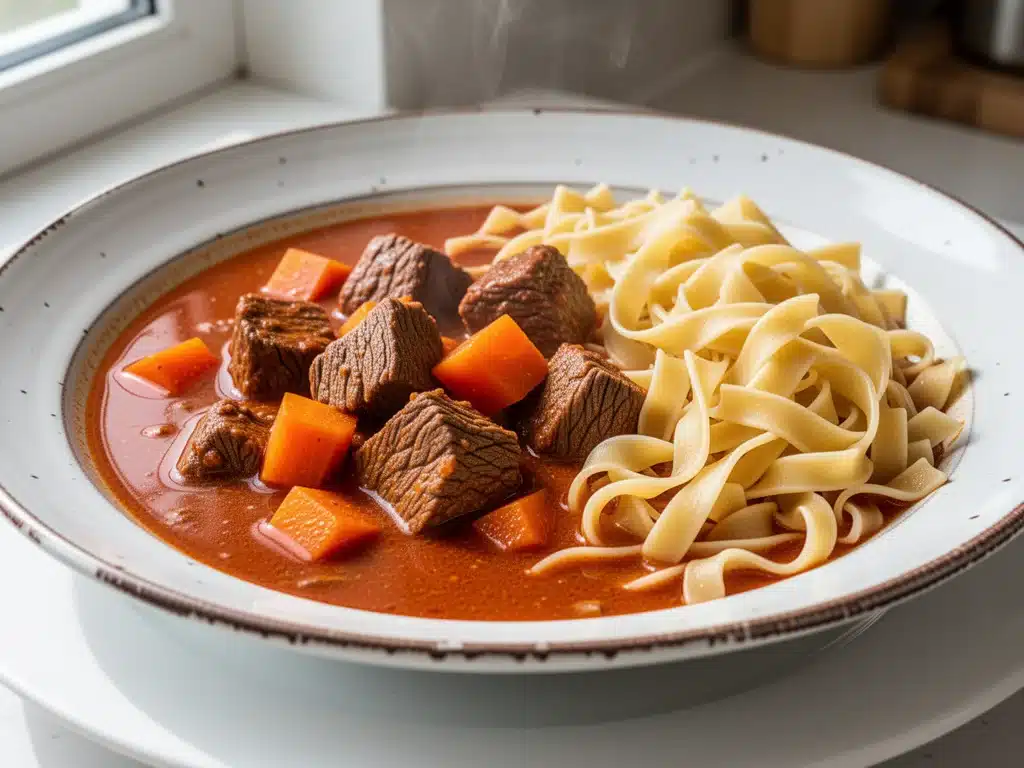
I still remember the first time I ate real goulash. I was in Budapest, huddled in a tiny, steamy restaurant near the central market, trying to stay warm while a blizzard raged outside. The waiter brought out a bowl that looked nothing like the “goulash” I’d grown up with back in Ohio—which was basically spicy beef stew with potatoes, thickened with flour and served over rice. This? This was a deep, ruby-red broth, tender as butter, loaded with chunks of beef that fell apart at a glance, and dotted with homemade egg noodles that had soaked up every bit of flavor.
I sat there for two hours, just eating and watching the snow. It wasn’t just dinner; it was a hug in a bowl. When I got home, I spent months trying to replicate it. I burned paprika, I overcooked the beef until it was shoe leather, and I used the wrong kind of noodles. But eventually, I cracked the code. This Traditional Hungarian Beef Goulash with Egg Noodles isn’t just a recipe; it’s my go-to comfort food for rainy days, tired weeknights, and when I need to feed a crowd without breaking the bank.
There’s something magical about this dish. It’s rustic, unpretentious, and deeply satisfying. The secret isn’t fancy ingredients—it’s patience and quality paprika. Once you master this beef goulash, you’ll never go back to the powdered packets or the quick stews from the grocery store. It’s a meal that tastes like it took all day, but honestly? It’s easier than you think. I make this on repeat because it freezes beautifully, reheats even better, and always makes my kitchen smell like a European café.
Why You’ll Love This Recipe
I’ve made this Hungarian beef goulash probably fifty times in the last few years. It’s survived power outages, busy work weeks, and family gatherings where I had to feed twelve hungry people. Here’s why it has earned a permanent spot in my weekly rotation:
- It’s a One-Pot Wonder — Okay, technically you might use a blender for the sauce or a separate pot for the noodles, but the goulash itself is mostly one heavy-bottomed pot. Less cleanup means more time relaxing. I love that I can toss everything in, set a timer, and forget about it for three hours.
- Freezer-Friendly Magic — This is the ultimate meal prep dish. I make a double batch every Sunday. By Wednesday, when I’m tired and don’t want to cook, I pull a container out of the freezer. The flavors actually deepen after a day or two in the fridge. It tastes better on day three than day one.
- Pantry Staples — You don’t need to go to a specialty store for this. Beef chuck, onions, carrots, potatoes, and pasta are things I always have. The only “special” item is good paprika, and that’s worth keeping stocked because you’ll use it in everything from this goulash to roasted chicken.
- Kid-Approved Comfort — My kids are notoriously picky. They hate “mushy” vegetables, but they love the soft potatoes and the chewy egg noodles in this goulash. It’s mild enough for little palates but flavorful enough for adults. I often serve it with a side of crusty bread for dipping.
- Budget-Smart — Beef chuck is affordable, especially when you buy it in larger chunks and cook it low and slow. This recipe stretches the meat with hearty vegetables and noodles, feeding a family of four for a fraction of what a restaurant meal would cost.
This isn’t just food; it’s reliability. It’s the dish I make when I need something that just works. No stress, no fancy techniques, just honest, hearty cooking that brings everyone to the table.
Ingredients You’ll Need
This Traditional Hungarian Beef Goulash with Egg Noodles relies on simple, high-quality ingredients. The magic happens in how they interact, so don’t skimp on the basics. Here’s what you need to grab from the store:
For the Goulash
Beef Chuck Roast (2-3 pounds / 1-1.5 kg) — This is non-negotiable. You need a cut with good marbling. Sirloin will be too dry; tenderloin is too expensive and lacks flavor. Chuck breaks down into fork-tender pieces after hours of slow cooking. Look for a roast with white streaks of fat running through it.
Yellow Onions (3 large / about 600g) — This dish is built on a sweet, caramelized onion base. You’ll use a lot of onions, and they disappear into the sauce. Don’t rush this step. If you use white onions, they’re too sharp. Sweet onions like Vidalia are great if you’re in season.
Paprika (3-4 tablespoons) — This is the soul of the dish. You need high-quality sweet Hungarian paprika. If you can’t find Hungarian, look for a reputable European brand. Avoid the tiny boxes in the spice aisle; they’re often stale and bitter. Fresh paprika gives that vibrant red color and sweet, earthy flavor.
Garlic (6-8 cloves, minced) — Yes, that many. Garlic adds depth and warmth. Fresh only. Jarred garlic has a metallic taste that clashes with the delicate paprika flavor.
Tomato Paste (2 tablespoons) — Adds richness and a touch of acidity to balance the fat. Some traditional recipes skip tomatoes entirely, but I find a little paste adds a nice complexity without making it taste like chili.
Beef Broth (4 cups / 960ml) — Use low-sodium so you can control the saltiness. Homemade stock is best, but a good quality store-bought broth works fine. Avoid the cartons that taste like water.
Carrots (3 medium, chopped) — Adds sweetness and color. I like them in chunks, not grated. They hold their shape well during long cooking.
Potatoes (2 large russet or Yukon Gold, cubed) — Russets break down more, thickening the stew. Yukon Golds hold their shape better. I usually do a mix. Peel them if you want a smoother texture, but leaving the skin on adds rustic charm.
Bay Leaves (2) — For subtle herbal notes. Remove before serving.
Salt and Black Pepper — To taste. Always season in layers.
For the Egg Noodles
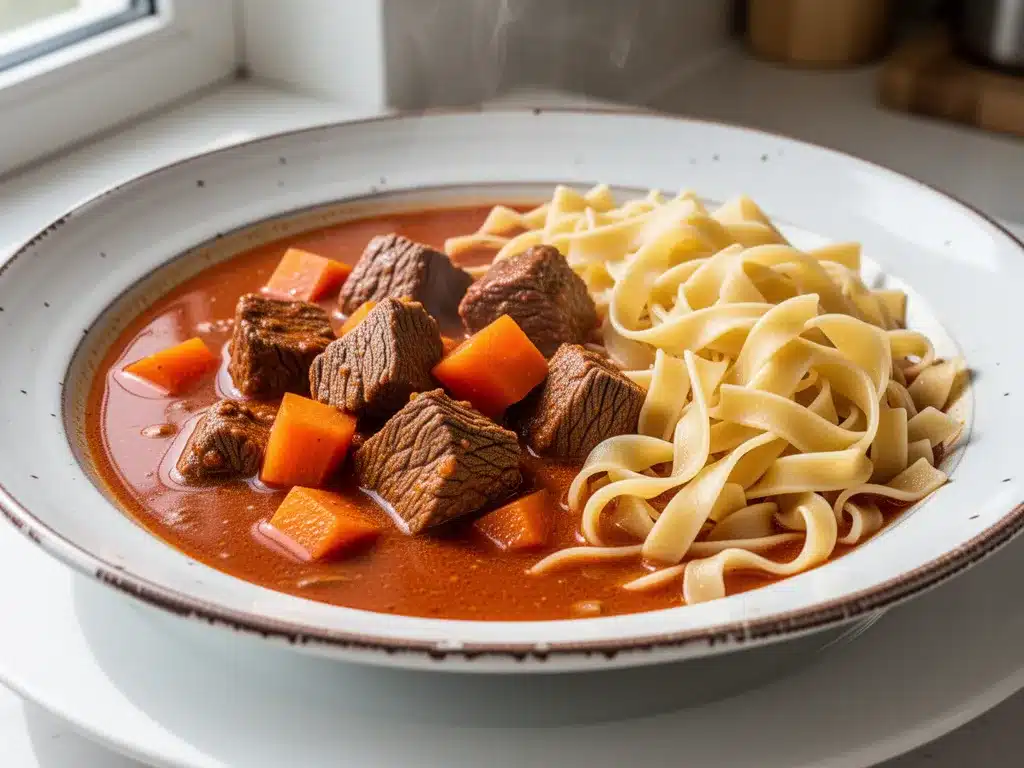
Egg Noodles (1 pound / 450g) — I prefer wide, flat egg noodles. They have a chewy texture that stands up to the thick stew. Dried is fine, but fresh noodles cook faster and taste silkier. If you can’t find egg noodles, pappardelle is a good substitute.
Butter (2 tablespoons) — For tossing the cooked noodles to prevent sticking.
Optional Add-ins
Green Peppers — Some people add diced green bell peppers for a bit of crunch and color. I usually skip them to keep the flavor pure, but if you like a bit of vegetal bite, toss them in with the carrots.
Sour Cream — Served on top for a cool, creamy contrast to the hot, spicy stew. This is traditional and highly recommended.
Equipment Needed
You don’t need fancy gadgets for this. Just the basics that most kitchens have:
Heavy-Bottomed Dutch Oven or Stockpot — I use a 7-quart Dutch oven. The heavy bottom prevents scorching, which is crucial when caramelizing onions and simmering for hours. If you don’t have one, a heavy cast-iron pot works well. Avoid thin pots; they’ll burn the paprika.
Large Skillet — For browning the beef in batches. If your pot is big enough, you can do it all in one, but browning in a skillet gives better crust.
Sharp Chef’s Knife — For chopping onions, carrots, and beef. A dull knife makes chopping onions painful.
Wooden Spoon — For stirring. Metal spoons can scratch non-stick surfaces, but with a Dutch oven, it doesn’t matter. Wood is gentle and heat-resistant.
Colander — For draining the noodles.
Measuring Spoons — For the paprika. Don’t eyeball it too much; paprika is potent.
How to Make It: Step-by-Step
Alright, let’s get cooking. This process is straightforward, but attention to detail makes the difference between okay goulash and amazing goulash.
Step 1: Prep Your Ingredients
Cut the beef chuck into 1.5-inch cubes. Pat them dry with paper towels—this is key for browning. If they’re wet, they’ll steam instead of sear. Dice the onions, mince the garlic, chop the carrots, and cube the potatoes. Have everything ready before you start cooking. Once the onions hit the pan, things move fast.
Step 2: Brown the Beef
Heat a large skillet over medium-high heat with a little oil. Working in batches, brown the beef cubes on all sides. Don’t crowd the pan! If you put too much meat in at once, the temperature drops, and the meat steams. You want a deep brown crust. This takes about 10-15 minutes total. Transfer the browned beef to a plate and set aside.
Step 3: Caramelize the Onions
In the same skillet (or directly in your Dutch oven if you’re doing it all in one pot), add a bit more oil if needed. Add the onions and a pinch of salt. Cook over medium-low heat for 15-20 minutes. Stir occasionally. You want them soft, sweet, and golden brown. This is the foundation of the flavor. Don’t rush this.
Step 4: Bloom the Paprika
Reduce the heat to low. Add the minced garlic and cook for 30 seconds until fragrant. Now, add the paprika. Stir quickly for about 30 seconds. This “blooms” the paprika, releasing its oils and flavor. Be careful not to burn it—burnt paprika is bitter. If the pan looks dry, add a splash of water or broth to keep it moist.
Step 5: Build the Stew
Add the tomato paste and stir for 1 minute. Pour in the beef broth, scraping up any browned bits from the bottom of the pot. These bits are pure flavor. Add the browned beef (and any juices on the plate), carrots, bay leaves, salt, and pepper. Bring to a boil, then reduce to a gentle simmer.
Step 6: Slow Cook
Cover and simmer on low heat for 1.5 to 2 hours. The beef should be fork-tender. If it’s still chewy, keep cooking. Check occasionally and stir. If the liquid reduces too much, add a splash more broth or water.
Step 7: Add Potatoes
After the beef is tender, add the cubed potatoes. Simmer uncovered for another 30-45 minutes, or until the potatoes are cooked through and tender. The stew should thicken slightly. If it’s too thin, simmer longer. If it’s too thick, add more broth.
Step 8: Cook the Noodles
While the goulash finishes, bring a large pot of salted water to a boil. Cook the egg noodles according to package directions until al dente. Drain and toss with butter to prevent sticking.
Step 9: Serve
Ladle the hot goulash into bowls. Serve over a generous portion of egg noodles. Top with a dollop of sour cream and fresh parsley if you have it. Eat immediately while it’s steaming hot.
Expert Tips & Tricks
Here’s everything I’ve learned from making this dozens of times. These tips will save you from my mistakes.
Quality Paprika is Everything
I can’t stress this enough. If you use stale or low-quality paprika, the whole dish will taste bitter and dull. Buy a fresh jar from a reputable source. If it’s been in your cabinet for two years, toss it and buy new. The color should be a vibrant red-orange, not dull brown.
Don’t Skip the Searing
It’s tempting to just throw raw beef into the pot, but browning adds depth. The Maillard reaction creates complex flavors that simmering alone can’t achieve. Take the time to brown the meat in batches.
Low and Slow
Beef chuck needs time to break down. High heat will make it tough. Keep the simmer gentle. If it’s boiling vigorously, you’re cooking it too hard. Low heat is your friend.
Season in Layers
Don’t just salt at the end. Season the onions, the beef, and the broth as you go. This builds a more complex flavor profile.
The Sour Cream Trick
If you’re serving sour cream, let it come to room temperature before adding it to the hot stew. If you add cold sour cream directly to the pot, it might curdle. Add it to your bowl instead for the best texture.
Variations & Substitutions
Once you’ve mastered the basic version, here’s how you can mix it up. I’ve tried all of these.
Vegetarian Version
Skip the beef and use vegetable broth. Add more carrots, potatoes, and maybe some mushrooms for umami. Mushroom goulash is delicious and hearty.
Spicy Goulash
Add 1 teaspoon of cayenne pepper or red pepper flakes along with the paprika. If you like heat, use some hot paprika instead of sweet.
Gluten-Free
Use gluten-free egg noodles or serve over rice or mashed potatoes instead. The stew itself is naturally gluten-free if you use gluten-free broth.
Dairy-Free
Skip the sour cream or use a dairy-free alternative like coconut cream. The stew is still rich and flavorful without it.
Slow Cooker Method
Brown the beef and caramelize the onions on the stovetop, then transfer everything to a slow cooker. Cook on low for 6-8 hours. Add potatoes in the last 2 hours. This is great for busy days.
Serving & Storage
How to Serve:
I usually serve this straight from the pot, ladled over the noodles. It looks rustic and stays warm. Pair it with crusty bread for dipping and a simple green salad to cut the richness.
Storage:
Store leftovers in an airtight container in the refrigerator for up to 4 days. The flavors meld and improve over time.
Reheating:
Reheat gently on the stovetop over low heat, adding a splash of broth or water if it’s too thick. Microwave in 30-second intervals, stirring in between. Avoid boiling, which can make the potatoes mushy.
Freezing:
This goulash freezes beautifully. Let it cool completely, then freeze in portions for up to 3 months. Thaw in the fridge overnight before reheating. Note that the noodles may become soft upon freezing and reheating. For best results, freeze the stew without noodles and cook fresh noodles when serving.
Nutrition Information
I’m not a nutritionist, but here’s the breakdown if you’re tracking. Keep in mind that values vary based on specific brands and cuts of meat.
Per Serving (based on 6 servings, including noodles):
- Calories: 550
- Protein: 35g
- Carbs: 50g
- Fiber: 4g
- Fat: 22g
- Sodium: 600mg
It’s a hearty meal, so it’s filling. If you want to lighten it up, use less oil for browning, skim the fat off the top after cooking, or serve over a smaller portion of noodles with extra vegetables.
Final Thoughts
So that’s my Traditional Hungarian Beef Goulash with Egg Noodles! It’s a recipe that’s been tested, tweaked, and loved in my kitchen for years. It’s more than just dinner; it’s a way to slow down and enjoy the process of cooking. There’s something meditative about stirring a pot of stew while the house fills with the smell of onions and paprika.
I hope you try this recipe and make it your own. Add your favorite vegetables, adjust the spice level, or serve it with different sides. The best recipes are the ones you adapt to your family’s tastes. If you make this, I’d love to hear how it turns out. Drop a comment and let me know what you think!
Happy cooking! And I hope your kitchen smells just as good as mine does.
Frequently Asked Questions
Can I use lean beef instead of chuck?
I don’t recommend it. Lean cuts like sirloin or round will become dry and tough after long simmering. Chuck has the right amount of fat and connective tissue to break down into tender, juicy pieces. If you must use lean beef, reduce the cooking time, but it won’t be as tender.
Why is my goulash bitter?
This is usually caused by burning the paprika. Paprika burns very quickly. Always add it at low heat and stir constantly for no more than 30-60 seconds. If you accidentally burn it, start over with a new batch. There’s no way to fix bitter paprika.
Can I make this in a pressure cooker?
Yes! This is actually a great method. Sear the beef and caramelize onions as usual. Then, add everything to the pressure cooker. Cook on high pressure for 35-45 minutes, then natural release. Add potatoes and cook for another 10 minutes on high pressure. This cuts the time significantly.
What kind of potatoes should I use?
Russet potatoes will break down and thicken the stew, giving it a creamy texture. Yukon Golds hold their shape better and add a buttery flavor. I often use a mix of both. Avoid waxy potatoes like red potatoes, as they can stay too firm.
Can I double this recipe?
Absolutely. Just make sure you have a large enough pot. You may need to brown the beef in more batches and caramelize the onions in stages. Cooking times will remain roughly the same.
Is this dish spicy?
Traditional sweet paprika goulash is not spicy. It’s savory and rich. If you want heat, add red pepper flakes or use hot paprika. The sour cream on top also helps cool down any spice.
Pin This Recipe!
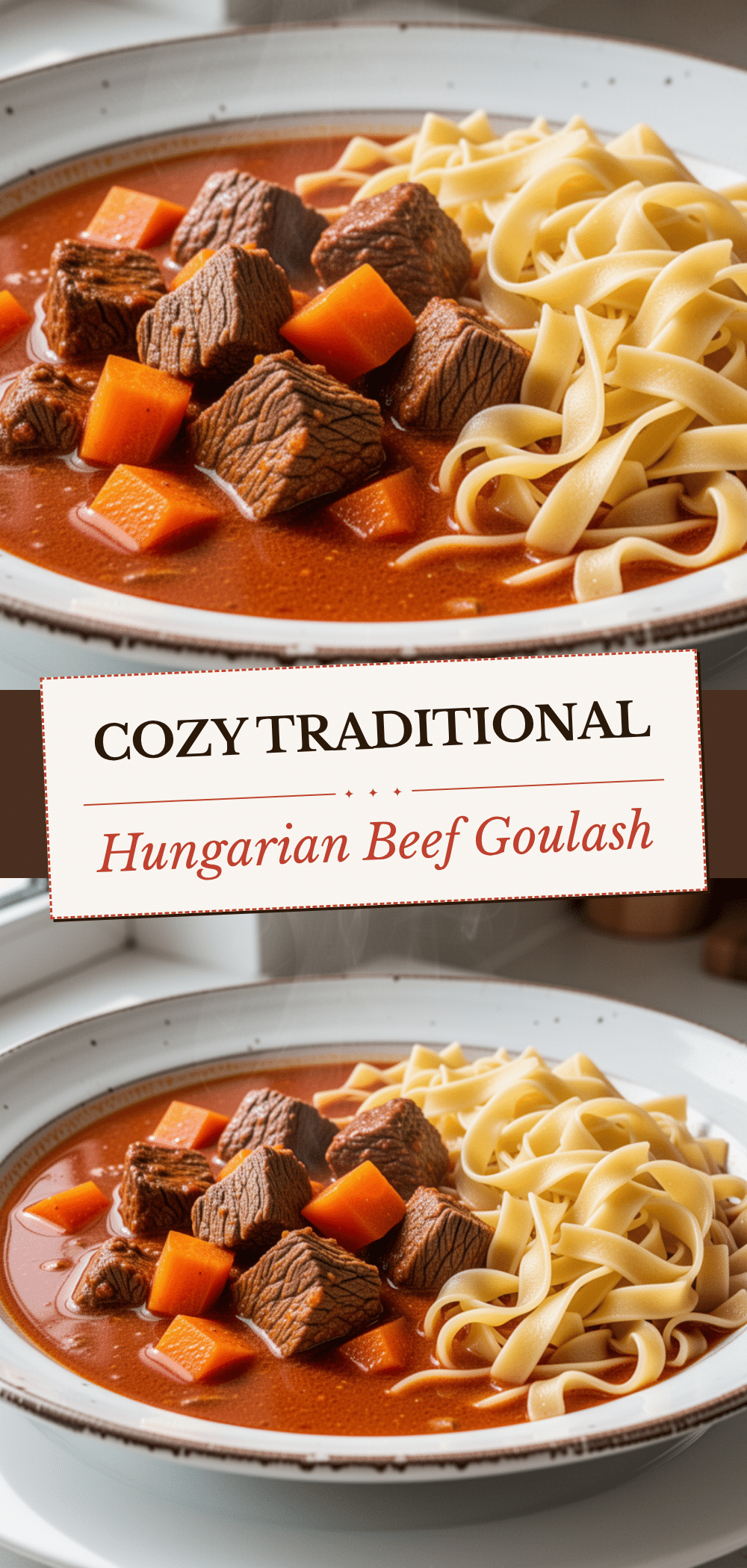
Traditional Hungarian Beef Goulash with Egg Noodles
- Total Time: 2 hours 50 minutes
- Yield: 6 servings 1x
Description
A deep, ruby-red beef stew made with tender chuck roast, caramelized onions, and high-quality paprika, served over homemade egg noodles. This rustic, one-pot comfort food is freezer-friendly and perfect for feeding a crowd.
Ingredients
- 2–3 pounds beef chuck roast, cut into 1.5-inch cubes
- 3 large yellow onions, diced
- 3–4 tablespoons sweet Hungarian paprika
- 6–8 cloves garlic, minced
- 2 tablespoons tomato paste
- 4 cups low-sodium beef broth
- 3 medium carrots, chopped into chunks
- 2 large russet or Yukon Gold potatoes, cubed
- 2 bay leaves
- Salt and black pepper, to taste
- 1 pound wide flat egg noodles
- 2 tablespoons butter
- Oil for browning beef
- Sour cream, for serving (optional)
- Fresh parsley, for garnish (optional)
Instructions
- Cut the beef chuck into 1.5-inch cubes and pat dry with paper towels. Dice onions, mince garlic, chop carrots, and cube potatoes.
- Heat a large skillet over medium-high heat with oil. Brown the beef cubes in batches until deeply browned on all sides (10-15 minutes total). Transfer to a plate.
- In the same skillet or a heavy-bottomed Dutch oven, add oil and onions with a pinch of salt. Cook over medium-low heat for 15-20 minutes until soft, sweet, and golden brown.
- Reduce heat to low. Add minced garlic and cook for 30 seconds. Add paprika and stir quickly for 30 seconds to bloom the flavor, being careful not to burn it.
- Add tomato paste and stir for 1 minute. Pour in beef broth, scraping up browned bits from the bottom. Add browned beef, carrots, bay leaves, salt, and pepper.
- Bring to a boil, then reduce to a gentle simmer. Cover and cook on low heat for 1.5 to 2 hours until beef is fork-tender.
- Add cubed potatoes. Simmer uncovered for another 30-45 minutes until potatoes are tender and stew has thickened.
- While goulash finishes, bring a large pot of salted water to a boil. Cook egg noodles according to package directions until al dente. Drain and toss with butter.
- Ladle hot goulash into bowls over egg noodles. Top with sour cream and fresh parsley if desired. Serve immediately.
Notes
Quality paprika is essential; stale paprika will make the dish bitter. Do not rush the caramelization of onions. For best results, freeze the stew without noodles and cook fresh noodles when serving. The flavors improve after sitting in the fridge for a day.
- Prep Time: 20 minutes
- Cook Time: 2 hours 30 minutes
- Category: Main Course
- Cuisine: Hungarian
Nutrition
- Serving Size: 1 bowl of goulash wi
- Calories: 550
- Sugar: 6
- Sodium: 600
- Fat: 22
- Saturated Fat: 8
- Carbohydrates: 50
- Fiber: 4
- Protein: 35
Keywords: Hungarian goulash, beef stew, egg noodles, comfort food, one-pot meal, traditional recipe, paprika stew


