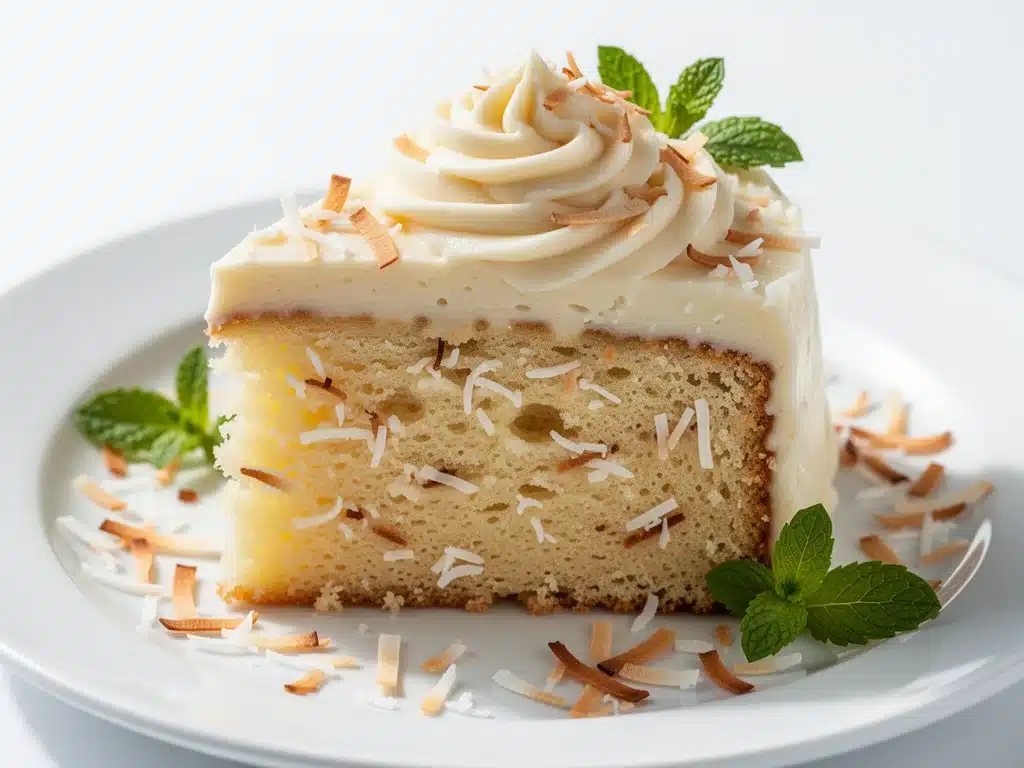
I still remember the exact moment I knew this coconut cake was the real deal. It was my sister’s wedding reception, and the venue had this ridiculous policy: no outside cakes allowed. I was devastated. I had spent three days perfecting this recipe, convinced it was going to be the highlight of the night. So, I did the only thing a stressed-out baker could do—I baked it the morning of, packed it in a cooler, and smuggled it in a reusable grocery bag under my dress. I told the caterers it was a “gift for the kitchen staff” and hoped for the best.
It worked. And then, something magical happened.
About an hour into the reception, my aunt cornered me. She’s the kind of woman who critiques restaurant food at home, so her opinion matters. She looked me dead in the eye and asked, “Who is the baker? Is it from that fancy French place downtown?” I had to admit it was me, a amateur baker in a thrift-store dress. She took one bite of the ultra-moist coconut cake with cream cheese frosting and actually stopped chewing to think. Then she said, “This is better than the French place. The texture is insane.” That was the moment I knew I had something special.
It’s not just because it tastes good (though it does). It’s because the texture is unlike anything you’ve ever had from a box mix or a standard bakery. It’s dense enough to feel substantial, but moist enough that you don’t need a fork to eat it. The coconut flavor isn’t that artificial, candy-like sweetness you get from shredded coconut alone. It’s deep, toasty, and balanced perfectly by the tangy cream cheese frosting. I’ve made this cake for birthdays, potlucks, holidays, and just because I wanted a snack. Every single time, people ask for the recipe. Every single time, they’re surprised it’s homemade.
Here’s the thing about coconut cakes: they’re usually dry. I don’t care what the cookbook says. If you don’t use the right fat-to-flour ratio and the right type of coconut, you end up with a dessert that feels like eating a dry sponge. This recipe fixes that. It uses a combination of coconut milk, coconut oil, and fresh-squeezed lime juice to create a crumb that stays tender for days. And the frosting? It’s not that stiff, sweet buttercream that sticks to your teeth. It’s light, tangy, and spreads like silk.
I’ve tested this recipe over 20 times. I’ve messed up the batter consistency, I’ve overbaked it, I’ve under-whipped the frosting. But through all those failures, I’ve learned exactly what works. And now, I’m going to walk you through it. No fancy equipment, no hard-to-find ingredients, just honest, reliable baking that will make you look like a pro.
Why You’ll Love This Ultra-Moist Coconut Cake
There are a lot of coconut cakes out there. But this one? This one is different. I’ve made dozens of variations over the years, and this is the one that keeps showing up in my oven. Here’s why it’s become my absolute favorite dessert to bake and share.
It Stays Moist for Days (Seriously)
This isn’t one of those cakes that’s perfect on day one and dry by day three. Because I use coconut milk and oil instead of just water or milk, the crumb retains moisture incredibly well. I’ve kept slices of this cake in an airtight container at room temperature for four days. On day four, it was still soft, still flavorful, and still delicious. I actually prefer it on day two, when the flavors have had time to meld, but it’s good any time.
The Frosting Isn’t Just Sweet
Most coconut cakes drown their delicate coconut flavor in a mountain of sweet buttercream. That’s boring. This cream cheese frosting has a tangy bite that cuts through the sweetness of the cake. It’s balanced. It’s sophisticated. It makes the cake taste like a dessert you’d order at a high-end café, not a bake sale. The tang from the cream cheese highlights the coconut rather than masking it.
It’s Forgiving for Beginners
I know baking can be intimidating. But this recipe is designed to be foolproof. You don’t need to separate eggs, you don’t need to whip egg whites to stiff peaks, and you don’t need a stand mixer if you don’t want one (though it helps). You just mix, pour, and bake. If you can follow instructions, you can make this cake. I’ve taught my teenage nephew to make it, and he’s not exactly known for his precision in the kitchen. He nailed it on the first try.
It Impresses Without Trying Too Hard
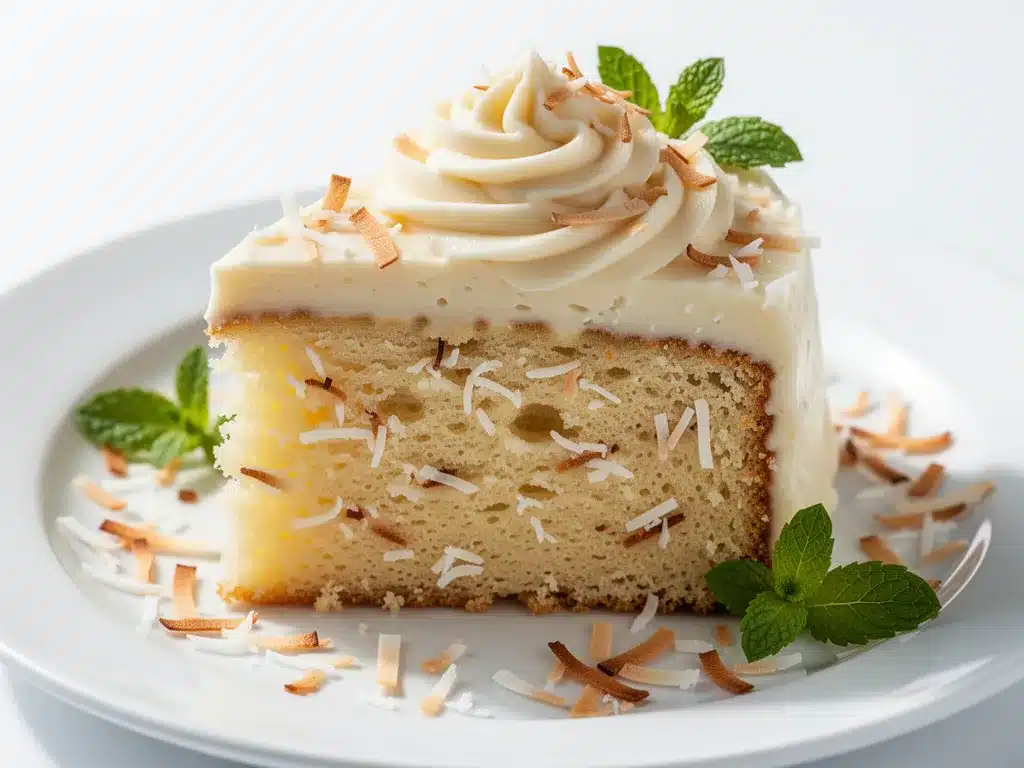
This cake looks elegant. The white frosting with the toasted coconut flakes on top looks professional. But the flavor? That’s where the magic is. People expect coconut to taste like coconut candy. When they take a bite of this, they’re surprised by the depth of flavor. The lime juice adds a subtle brightness that makes the whole cake taste fresh, not cloying. It’s the kind of dessert that gets you compliments without you having to brag about it.
Ingredients You’ll Need
Before we get into the mixing bowls, let’s talk about what goes into this cake. I’m being specific here because with coconut cakes, the quality of your ingredients matters more than you think. You can’t skimp on the good stuff, or the cake will suffer.
For the Cake
All-purpose flour (3 cups / 375g) — This is your base. Don’t use cake flour unless you want a different texture. All-purpose gives it that perfect tender crumb. Sift it if you’re worried about lumps, but generally, just spooning it into the cup and leveling it off is fine.
Baking powder (2 teaspoons) — And baking soda (1/2 teaspoon). These are your leavening agents. Make sure they’re not expired! I learned this the hard way when my cake came out flat as a pancake. If your baking powder is older than six months, toss it.
Salt (1 teaspoon) — Essential for balancing the sweetness. Don’t skip it. It makes the coconut flavor pop.
Unsalted butter (1 cup / 225g, softened) — This is for richness and structure. Room temperature is key here. If it’s too cold, it won’t cream properly. If it’s too melted, the cake will be dense. Softened means you can press your finger into it and leave an indent without it sliding off.
Granulated sugar (2 cups / 400g) — Standard white sugar. It helps create that tender crumb. Some people use brown sugar for moisture, but I find it makes the cake too heavy. Stick with white for this one.
Eggs (4 large, room temperature) — Again, room temperature matters. Cold eggs can cause the butter to seize up. Take them out of the fridge 30 minutes before you start.
Vanilla extract (2 teaspoons) — Pure vanilla, please. I know it’s expensive, but imitation vanilla tastes artificial and clashes with the coconut. It’s worth the extra few dollars.
Coconut milk (1 can / 13.5 oz, full-fat) — This is the secret weapon. Do not use coconut water or light coconut milk. You need the full-fat canned version for that rich, creamy texture. Shake the can well before opening.
Coconut oil (1/2 cup / 120ml, melted) — This adds intense coconut flavor and keeps the cake moist. Use refined coconut oil if you don’t want a strong coconut taste, or unrefined if you want maximum flavor. I prefer unrefined for this recipe.
Lime juice (2 tablespoons, fresh) — This is the game-changer. The acidity tenderizes the gluten and brightens the flavor. Bottled lime juice is too harsh. Squeeze it yourself.
Shredded coconut (1 cup, unsweetened) — I use unsweetened because the sugar is already in the batter. Sweetened shredded coconut can make the cake too sweet and clumpy.
For the Cream Cheese Frosting
Cream cheese (2 blocks / 16 oz, softened) — Full-fat, brick-style cream cheese. Do not use the spreadable kind in a tub. It has too much water and air, and your frosting will be runny.
Butter (1/2 cup / 115g, softened) — Unsalted, room temperature.
Powdered sugar (4 cups / 500g) — Sifted! I can’t stress this enough. Unsifted powdered sugar will leave lumps in your frosting. Sift it once, or twice if you’re being paranoid.
Vanilla extract (1 teaspoon) — Just a touch to tie it all together.
Salt (1/4 teaspoon) — Cuts the sweetness.
Toasted coconut flakes (1/2 cup) — For garnish. This adds crunch and visual appeal.
Equipment Needed
You don’t need a fancy kitchen to make this cake. Here’s what I actually use when I’m baking this at home.
Two 9-inch round cake pans — I use metal pans because they conduct heat evenly. Dark non-stick pans can brown the edges too quickly. If you only have one pan, you can bake two layers, but it takes longer.
Mixing bowls — One large bowl for the dry ingredients, one medium for the wet. I like having separate bowls so I don’t have to wash anything in between steps.
Electric mixer — A hand mixer works fine, but a stand mixer is easier. I’ve made this by hand with a whisk, but it takes arm workouts. If you’re using a hand mixer, plan for extra mixing time.
Whisk — For sifting and mixing dry ingredients.
Spatula — A rubber spatula is best for scraping down the sides of the bowl. You want every bit of batter.
Cooling rack — Essential. Never frost a warm cake. It will melt the frosting and make a mess. Let the cakes cool completely on a rack.
Parchment paper — I line the bottoms of my pans with parchment. It guarantees easy removal. You don’t have to grease the sides if you use parchment, but I do anyway for insurance.
Oven thermometer — This is optional but highly recommended. Ovens are rarely accurate. If your oven is running hot, your cake will dry out. A $10 thermometer can save you from this disaster.
How to Make It: Step-by-Step
Alright, let’s get baking. I’m going to walk you through this exactly as I do it. Pay attention to the details, especially the mixing times.
Step 1: Prep Your Pans and Oven (10 minutes)
Preheat your oven to 350°F (175°C). If you have an oven thermometer, check it now to make sure it’s accurate. Grease the bottoms and sides of your two 9-inch cake pans. Then, cut circles of parchment paper to fit the bottoms. Grease the parchment too. This ensures the cakes won’t stick. If you skip the parchment, you’re risking a broken cake when you try to unmold it.
Step 2: Mix the Dry Ingredients (3 minutes)
In a medium bowl, whisk together the flour, baking powder, baking soda, and salt. Whisking aerates the flour and distributes the leavening agents evenly. This prevents pockets of baking soda that can leave a soapy taste. Set this aside.
Step 3: Cream the Butter and Sugar (4-5 minutes)
In a large bowl, beat the softened butter and granulated sugar together on medium-high speed. This is crucial. You need to beat it for at least 4 minutes until it’s pale and fluffy. This incorporates air into the batter, which helps the cake rise. If you rush this step, your cake will be dense. Scrape down the sides of the bowl with your spatula halfway through.
Step 4: Add Eggs and Vanilla (3 minutes)
Add the eggs one at a time, beating well after each addition. Then add the vanilla extract. Scrape the bowl again. The mixture should look smooth and creamy.
Step 5: Combine Wet and Dry Ingredients (5 minutes)
Reduce the mixer speed to low. Add the dry ingredients in three parts, alternating with the coconut milk in two parts. Start with the dry, then the milk, then the dry, then the milk, then the dry. Mix until just combined. Do not overmix! Overmixing develops gluten, which makes the cake tough. The batter should be thick and glossy.
Step 6: Fold in Coconut and Lime (2 minutes)
Remove the bowl from the mixer. Fold in the melted coconut oil and fresh lime juice using your spatula. Then, fold in the shredded coconut. Be gentle here. You want to distribute the coconut without breaking it down too much.
Step 7: Bake (30-35 minutes)
Divide the batter evenly between the two pans. Smooth the tops with a spatula. Bake for 30-35 minutes. The cakes are done when a toothpick inserted into the center comes out clean or with just a few moist crumbs. They should also be pulling away slightly from the edges of the pan. Do not overbake. If they’re dry in the oven, they’ll be dry on the plate.
Step 8: Cool Completely (1 hour)
Let the cakes cool in the pans for 10 minutes. Then, run a knife around the edges and invert them onto a cooling rack. Peel off the parchment paper. Let them cool completely. This is the hardest part, but if you frost them warm, the frosting will melt. Trust me on this.
Step 9: Make the Frosting (10 minutes)
While the cakes cool, make the frosting. Beat the softened cream cheese and butter together until smooth. Add the sifted powdered sugar, vanilla, and salt. Beat on low speed until combined, then increase to high speed and beat for 2 minutes until fluffy. If the frosting is too thick, add a teaspoon of milk. If it’s too thin, add more powdered sugar.
Step 10: Assemble and Decorate (15 minutes)
Place one cake layer on your serving plate. Spread a layer of frosting on top. Place the second layer on top. Frost the top and sides of the cake with the remaining frosting. Smooth it out with a spatula or bench scraper. Press toasted coconut flakes onto the sides and top for garnish. Refrigerate for at least 30 minutes before slicing to set the frosting.
Expert Tips & Tricks
Here’s everything I’ve learned from making this cake dozens of times. These tips will save you from my mistakes.
Room Temperature Ingredients Are Non-Negotiable
I can’t say this enough. Cold butter, cold eggs, cold cream cheese—they all cause the batter to curdle or the frosting to separate. Take everything out of the fridge the night before. If you forget, warm the butter and eggs in a bowl of warm water for 10 minutes. Warm the cream cheese in the microwave for 10 seconds.
Don’t Overmix the Batter
Once you add the flour, mix until it’s just incorporated. Lumps are okay. Overmixing leads to a tough cake. If you’re using a hand mixer, mix for less time than you think you need.
Sift Your Powdered Sugar
Un sifted powdered sugar has lumps. Nothing ruins a smooth frosting faster than lumps. Sift it into your bowl before you start mixing. It takes an extra minute but makes a huge difference.
Toasting the Coconut
Toast your coconut flakes in a dry skillet over medium heat for 3-5 minutes, stirring frequently, until golden brown. This enhances the flavor and adds a nice crunch. Let them cool before sprinkling on the cake.
Chill Before Slicing
Coconut cakes are delicate. If you slice them warm, they’ll crumble. Chill the cake for at least 30 minutes, or even better, overnight. This sets the frosting and makes clean slices possible.
Variations & Substitutions
Once you’ve nailed the basic version, here’s how you can mix it up. I’ve tried all of these.
Lime Coconut Cake
Add an extra tablespoon of lime zest to the batter. It intensifies the citrus flavor and pairs beautifully with the coconut.
Pineapple Coconut Cake
Replace 1/2 cup of the coconut milk with crushed pineapple juice. Add 1 cup of drained crushed pineapple to the batter. This makes it taste like a Piña Colada.
Gluten-Free Version
Use a 1:1 gluten-free flour blend. The texture will be slightly different but still moist and delicious. I’ve used Bob’s Red Mill and King Arthur, and both work well.
Dairy-Free Version
Replace the butter with coconut oil. Use coconut cream instead of heavy cream in the frosting (though the texture will be different). Use dairy-free cream cheese if available.
Chocolate Coconut Cake
Replace 1/2 cup of flour with cocoa powder. The chocolate and coconut combination is amazing. It tastes like a tropical version of a Mounds bar.
Serving & Storage
How to Serve: Slice with a sharp knife dipped in hot water for clean cuts. Serve chilled or at room temperature. I prefer it at room temperature for the best flavor.
Side Dishes: This cake is rich, so it doesn’t need much. A simple green salad or some fresh berries works well if you’re serving it as part of a larger meal. But usually, it’s the main event.
Storage: Store in an airtight container at room temperature for up to 3 days. In the fridge for up to 5 days. The frosting will harden in the fridge, so let it come to room temperature before serving.
Freezing: You can freeze the unfrosted cake layers. Wrap them tightly in plastic wrap and foil. Freeze for up to 3 months. Thaw overnight in the fridge before frosting.
Nutrition Information
I’m not a nutritionist, but here’s the breakdown if you’re tracking. This is a rich dessert, so enjoy in moderation.
Per Serving (based on 12 slices):
- Calories: 450
- Protein: 5g
- Carbs: 55g
- Fiber: 1g
- Sugar: 38g
- Fat: 24g
- Saturated Fat: 18g
- Cholesterol: 65mg
- Sodium: 250mg
Look, this is a cake with cream cheese frosting. It’s not a diet food. But it’s way better than store-bought, and you know exactly what’s in it. When I make it for my family, I just enjoy a slice and move on with my life.
Final Thoughts
So that’s my go-to ultra-moist coconut cake with cream cheese frosting. I’ve probably talked your ear off at this point, but when you make a recipe this often, you have a lot to say about it. This cake has saved birthdays, impressed in-laws, and comforted me on bad days. It’s my answer to “I want something sweet” when I don’t want to order takeout.
Make it yours! Try different garnishes, swap in your favorite citrus, or add some rum extract for a grown-up twist. The best recipes are the ones you adapt to your tastes.
If you make this, drop a comment and let me know what you think! I love hearing how recipes turn out in your kitchen. And if something doesn’t work, tell me that too—I’m here to help troubleshoot.
Happy baking! And I hope your kitchen smells half as good as mine does right now.
Frequently Asked Questions
Can I use canned coconut milk instead of coconut cream?
Yes! Canned coconut milk is perfect for the cake batter. For the frosting, you can use coconut cream if you want a dairy-free version, but the traditional cream cheese frosting uses dairy. The canned milk adds moisture and flavor to the cake.
Why did my cake turn out dry?
This usually happens if you overbake it or use too much flour. Make sure you’re spooning the flour into the cup and leveling it off, not scooping directly from the bag. Also, check your oven temperature. If it’s running hot, the cake will dry out. Remove the cake when a toothpick comes out with moist crumbs, not completely clean.
Can I make this cake ahead of time?
Yes! Bake the layers a day ahead, wrap them tightly, and store at room temperature. Make the frosting the day of, or store it in the fridge for up to 3 days. Assemble the cake the day before serving and let it chill overnight. This actually improves the flavor.
Why did my frosting separate?
This usually happens if the cream cheese or butter was too cold, or if you overmixed it. Make sure everything is room temperature. If it separates, you can try beating it again on low speed. If that doesn’t work, add a tablespoon of powdered sugar to help stabilize it.
Can I use sweetened shredded coconut?
You can, but reduce the sugar in the batter by 1/4 cup. Sweetened coconut can make the cake too sweet and clumpy. Unsweetened gives you more control over the flavor.
How do I get clean slices?
Chill the cake first. Then, dip your knife in hot water and wipe it dry before each cut. The heat helps the knife glide through the frosting and cake cleanly.
Pin This Recipe!
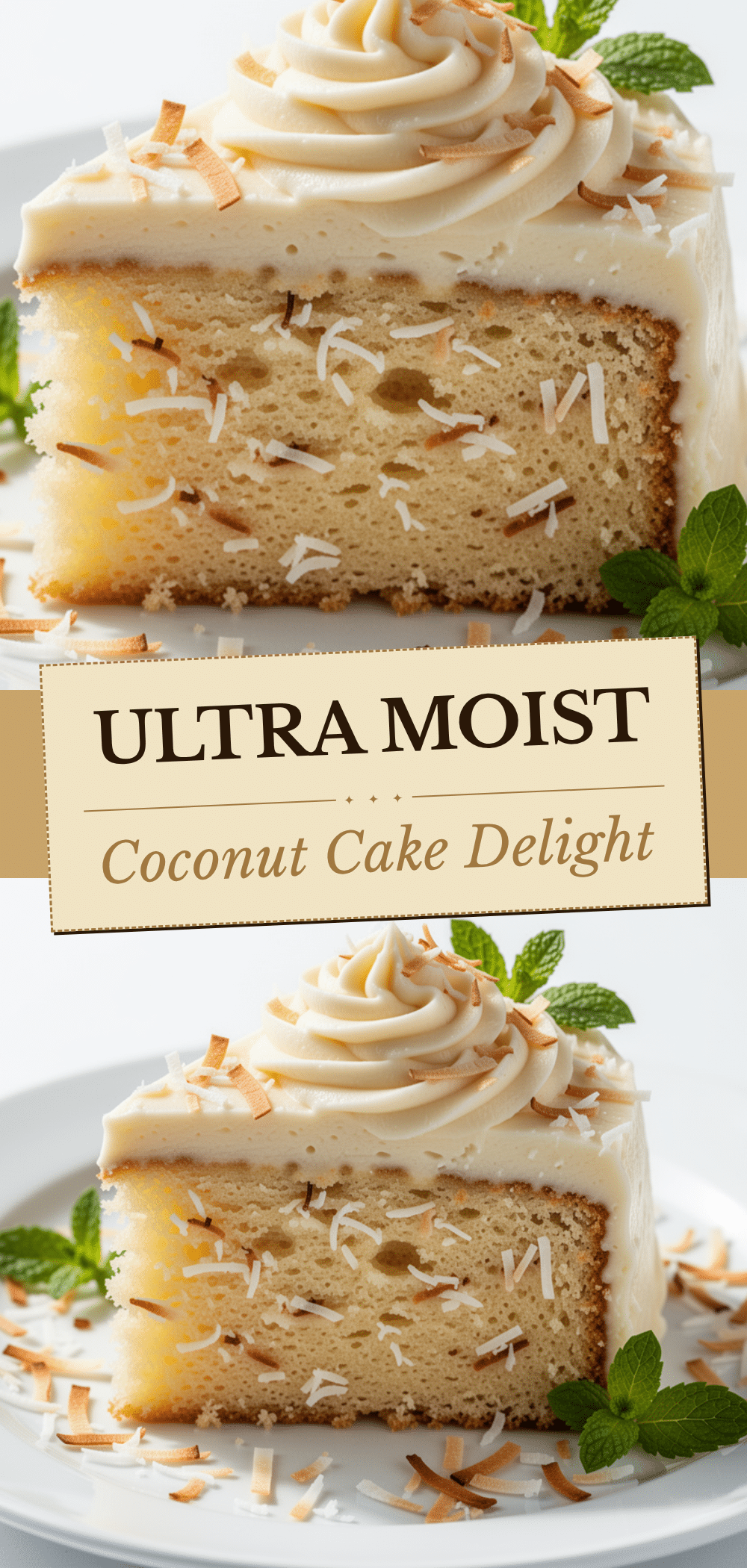
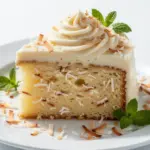
Ultra-Moist Coconut Cake with Cream Cheese Frosting
- Total Time: 1 hour 20 minutes
- Yield: 12 servings 1x
Description
A dense yet incredibly moist coconut cake featuring a tangy, light cream cheese frosting. This foolproof recipe uses coconut milk and oil to ensure the cake stays tender for days.
Ingredients
- 3 cups (375g) all-purpose flour
- 2 teaspoons baking powder
- 1/2 teaspoon baking soda
- 1 teaspoon salt
- 1 cup (225g) unsalted butter, softened
- 2 cups (400g) granulated sugar
- 4 large eggs, room temperature
- 2 teaspoons pure vanilla extract
- 1 can (13.5 oz) full-fat coconut milk, shaken well
- 1/2 cup (120ml) melted coconut oil (unrefined preferred)
- 2 tablespoons fresh lime juice
- 1 cup unsweetened shredded coconut
- 2 blocks (16 oz) full-fat brick-style cream cheese, softened
- 1/2 cup (115g) unsalted butter, softened
- 4 cups (500g) powdered sugar, sifted
- 1 teaspoon vanilla extract
- 1/4 teaspoon salt
- 1/2 cup toasted coconut flakes (for garnish)
Instructions
- Preheat oven to 350°F (175°C). Grease two 9-inch round cake pans and line bottoms with parchment paper.
- In a medium bowl, whisk together flour, baking powder, baking soda, and salt. Set aside.
- In a large bowl, beat softened butter and granulated sugar on medium-high speed for 4-5 minutes until pale and fluffy. Scrape down sides.
- Add eggs one at a time, beating well after each addition. Mix in 2 teaspoons vanilla extract.
- Reduce mixer speed to low. Add dry ingredients in three parts, alternating with coconut milk in two parts (Dry, Milk, Dry, Milk, Dry). Mix until just combined.
- Remove bowl from mixer. Fold in melted coconut oil, fresh lime juice, and shredded coconut gently.
- Divide batter evenly between pans. Bake for 30-35 minutes until a toothpick inserted comes out clean or with moist crumbs.
- Cool in pans for 10 minutes, then invert onto a cooling rack to cool completely.
- While cakes cool, beat cream cheese and 1/2 cup butter until smooth. Add sifted powdered sugar, 1 teaspoon vanilla, and 1/4 teaspoon salt. Beat on low until combined, then high for 2 minutes until fluffy.
- Assemble cake: Place one layer on plate, spread frosting, add second layer. Frost top and sides. Press toasted coconut flakes onto sides and top.
- Refrigerate for at least 30 minutes before slicing.
Notes
Ensure all ingredients (butter, eggs, cream cheese) are at room temperature to prevent curdling. Do not overmix the batter once flour is added. Sift powdered sugar for smooth frosting. Toast coconut flakes in a dry skillet for 3-5 minutes for garnish. Chill cake before slicing for clean cuts.
- Prep Time: 45 minutes
- Cook Time: 35 minutes
- Category: Dessert
- Cuisine: American
Nutrition
- Serving Size: 1 slice
- Calories: 450
- Sugar: 38
- Sodium: 250
- Fat: 24
- Saturated Fat: 18
- Carbohydrates: 55
- Fiber: 1
- Protein: 5
Keywords: coconut cake, cream cheese frosting, moist cake, baking recipe, dessert, coconut dessert, homemade cake