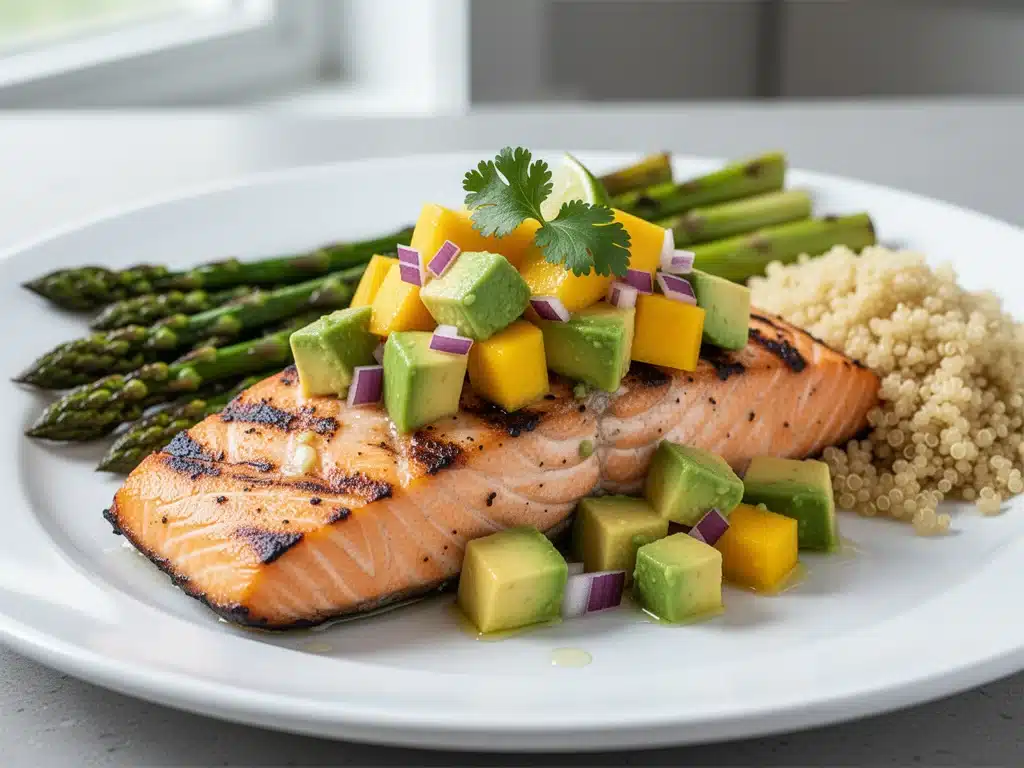
Last July, I stood on my back porch watching a storm roll in while my salmon sat in the grill, smoking and sizzling. It was supposed to be a romantic anniversary dinner. Instead, it was just me, my dog, and a plate of food that tasted like victory. I had completely botched the marinade earlier—way too much soy sauce, not enough lime—and I was ready to order pizza. But then I threw together a salsa with whatever was in the fridge: a slightly mushy mango, an avocado that was ripe to the point of being brown, and some jalapeño from the garden that was basically a firework.
I spooned that messy, chunky salsa over the charred fish, took a bite, and stopped worrying about everything else. It was bright, spicy, creamy, and smoky all at once. That meal wasn’t fancy. It wasn’t perfect. But it was the best dinner I’d had in months. That’s when I knew I had to write down how to make paleo grilled salmon with mango avocado salsa for real. Not the restaurant version with tiny portions and overpriced wine, but the real, messy, homemade version that fits into a busy week and still feels like a treat.
I’ve made this dish probably fifty times since that night. Some weeks it’s just salmon and salsa. Other times I add shrimp or swap the mango for peaches. But the core idea stays the same: simple, high-quality protein meets fresh, vibrant fruit. It’s the kind of meal that makes you forget you’re eating “healthy.” It tastes indulgent. It feels luxurious. And yet, it’s genuinely good for you. If you’re looking for a way to eat clean without eating boring, this is your answer.
Why You’ll Love This Recipe
There are about a dozen reasons I keep coming back to this meal, but let’s be honest—you’re probably here because you want dinner to be easier, faster, and more interesting than your usual rotation. This recipe checks every box. It’s not just another chicken breast with steamed broccoli. It’s a flavor explosion that takes less time than you think.
- Ready in 20 Minutes — Seriously. I timed it. From thawing the fish to plating, it’s twenty minutes if you’re efficient. If you’re not? Maybe twenty-five. But it’s never more than that. I make this on nights when I’m exhausted, when the kids are screaming, or when I just want to sit down and read a book without worrying about a three-hour cook time.
- Pack Full of Omega-3s — Salmon is a powerhouse. I’m not a nutritionist, but I know that eating fatty fish twice a week helps my brain fog and keeps my joints happy. This paleo grilled salmon with mango avocado salsa delivers all the good fats without any of the heavy, greasy feeling that comes from fried foods. You feel energized after eating this, not sluggish.
- No Fussy Ingredients — You don’t need to hunt down exotic spices or special sauces. The flavor comes from the food itself: the sweetness of the mango, the heat of the jalapeño, the richness of the avocado, and the smokiness of the grill. It’s clean eating at its most delicious. If you have a mango, an avocado, and some salmon, you’re already halfway there.
- Perfect for Meal Prep (Sort Of) — While I don’t recommend prepping the salsa ahead (avocados turn brown, it’s a fact of life), the salmon is great cooked in batches. I’ll grill four fillets at once, eat two that night, and save two for lunch. The salsa is best fresh, but I’ll make a double batch of the fruit mix and just add the avocado right before eating. It’s a hack that works.
- Kids and Picky Eaters Approve — I know, I know. “Salmon? With fruit? No way.” But my kids love it. The sweetness of the mango masks the “fishy” taste that some people dislike. The salsa makes it feel like a party in their mouth. If you can get your family to eat vegetables and fruit together, you’ve won at dinner. This recipe is my secret weapon.
This is my go-to when I need dinner to just work. No complicated techniques, no weird ingredients, just reliable, delicious food that makes everyone happy. It’s healthy, sure. But mostly, it’s just really, really good.
Ingredients You’ll Need
Here’s the best part: you probably have most of this already. I’m particular about a few things, but for the most part, this is a pantry-and-produce store run. I want you to succeed, so here’s exactly what you need and why it matters.
For the Salmon
Salmon fillets (4 pieces, about 6 ounces each / 170g each) — This is the star. Look for wild-caught if you can find it—it has better flavor and more nutrients than farmed. But honestly? Any fresh salmon works. I buy the family pack when it’s on sale and freeze individual portions. Just make sure it’s thawed in the fridge overnight before you cook. Never cook frozen salmon directly; it’ll be mushy. Pat it dry with paper towels. Moisture is the enemy of a good sear.
Avocado oil or olive oil (2 tablespoons / 30ml) — I prefer avocado oil for grilling because it has a higher smoke point. Olive oil works, but it can burn if your grill is too hot. You just need enough to coat the fish so it doesn’t stick.
Garlic powder (1 teaspoon / 5g) — Fresh garlic can burn on the grill, so I use powder for the rub. It gives that savory depth without the risk of charred bits. If you must use fresh, mince it super fine and mix it with the oil, but keep an eye on it.
Onion powder (½ teaspoon / 2g) — Adds a subtle sweetness that balances the fish. Don’t skip it. It’s not just filler.
Smoked paprika (1 teaspoon / 5g) — This is the secret weapon. It adds a smoky flavor that mimics the grill even if you’re cooking indoors. If you don’t have it, regular paprika works, but it won’t have that same depth. I keep this jar on my counter because I use it for everything.
Lemon juice (2 tablespoons / 30ml) — Freshly squeezed. Bottled juice tastes metallic and fake. Squeeze it yourself. It brightens the fish and cuts through the richness.
Salt and black pepper — To taste. I use kosher salt because it’s easier to control. Sea salt works too.
For the Mango Avocado Salsa
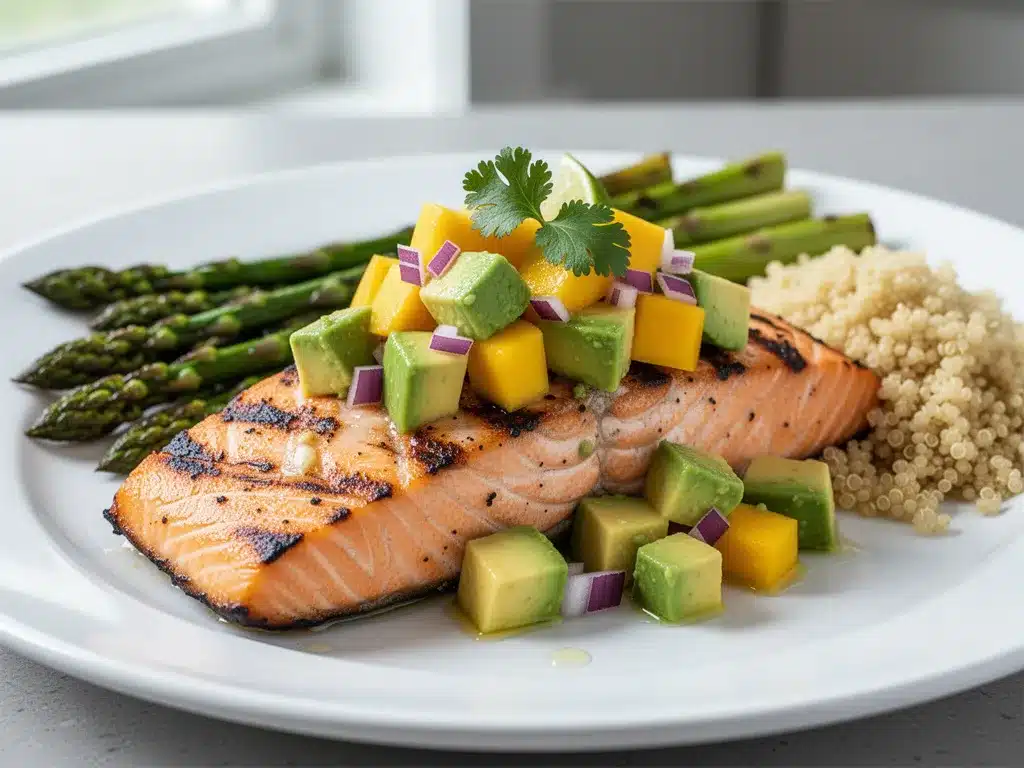
Ripe mango (2 medium / about 300g flesh) — This is crucial. The mango needs to be ripe. If it’s hard, it’ll be sour and crunchy in a bad way. Look for one that yields slightly to pressure and smells sweet at the stem end. I use Ataulvo (Honey) mangoes when I can find them—they’re less fibrous and sweeter. But Tommy Atkins works if that’s all you have.
Ripe avocado (2 large / about 400g flesh) — Same rule: ripe. If you cut it and the pit comes out easily and the flesh is bright green, you’re good. If it’s brown or hard, don’t use it. I use Hass avocados because they’re creamy. The texture of the avocado in the salsa is what makes it feel luxurious.
Red onion (¼ cup / 40g, finely diced) — Raw onion can be harsh. I soak the diced onion in cold water for 10 minutes before using it. This removes the bite and makes it sweet and crisp. It’s a small step that makes a big difference.
Fresh cilantro (½ cup / 15g, chopped) — The herb that ties it all together. If you hate cilantro (genetic trait, I’m not judging), you can use parsley or mint. But cilantro is traditional for a reason. It adds that fresh, citrusy lift.
Jalapeño (1 small / 20g, seeded and minced) — For heat. Remove the seeds and ribs if you want it mild. Leave them in if you like a kick. I usually leave half the seeds in for a medium heat. Be careful—your fingers will burn if you touch your eyes later. Wash them immediately.
Lime juice (3 tablespoons / 45ml) — Freshly squeezed. Lime is sharper than lemon and pairs better with the tropical fruit. It also helps keep the avocado from browning.
Sea salt (½ teaspoon / 3g) — To taste. The salsa needs salt to make the flavors pop.
Equipment Needed
You don’t need fancy equipment for this. Here’s what I actually use.
Grill (Outdoor or Indoor) — I prefer an outdoor charcoal or gas grill for that authentic smoky flavor. But a cast-iron skillet works perfectly if you’re cooking indoors. The key is high heat. If you have a grill pan, use that. Just make sure it’s screaming hot before you put the fish on.
Sharp Knife — For dicing the mango and avocado. A dull knife will mush the fruit. I use a 8-inch chef’s knife for everything. It’s my most-used tool in the kitchen.
Cutting Board — Any size works. I use a plastic one for the fish and a wooden one for the fruit to avoid cross-contamination. Just keep it clean.
Mixing Bowls — One medium bowl for the salsa. One small bowl for the fish rub. You can use the same bowl if you wash it, but two is easier.
Measuring Spoons — For the spices. I’m not super precise with the salsa, but the spices for the fish benefit from a little measurement.
Slotted Spoon or Spatula — For mixing the salsa and flipping the fish. A wide spatula is best for the salmon so it doesn’t break apart.
Zester or Microplane — Optional, but I love adding a little lime zest to the salsa. It adds an extra layer of aroma that juice alone doesn’t provide. If you don’t have one, just use extra juice.
How to Make It: Step-by-Step
Alright, let’s make this! I’m walking you through exactly how I do it, including the little tricks I’ve picked up over the years.
Step 1: Prep the Salmon (5 minutes)
Start by taking your salmon out of the fridge. Let it sit for 10-15 minutes while you prep the other ingredients. Cold fish hits the grill and drops the temperature, which can lead to uneven cooking. Pat the fillets dry with paper towels—this is non-negotiable. Wet fish steams instead of sears. In a small bowl, mix the garlic powder, onion powder, smoked paprika, salt, and pepper. Drizzle the oil over the fish and rub the spice mix all over both sides. Don’t be shy with the spices. You want a good crust.
Step 2: Make the Salsa (10 minutes)
While the fish rests, make the salsa. Dice the mango and avocado into bite-sized pieces. Try to keep them roughly the same size so you get a bit of everything in each spoonful. Dice the red onion as finely as you can. If you’re sensitive to raw onion, soak it in ice water for 10 minutes and then drain well. Mince the jalapeño, being careful with the seeds. Chop the cilantro. In a medium bowl, combine the mango, avocado, onion, jalapeño, and cilantro. Squeeze in the lime juice and add the salt. Gently toss everything together. Don’t mash the avocado—just coat the pieces. Taste and adjust. Need more lime? Add it. Need more heat? Add jalapeño. This is your salsa, so make it yours.
Step 3: Heat the Grill (5 minutes)
Get your grill hot. If you’re using an outdoor grill, aim for medium-high heat (about 400°F / 200°C). If you’re using a skillet, get it smoking hot. Oil the grates or the pan with a paper towel dipped in oil. This prevents sticking. I use tongs to hold the oil-soaked paper towel—be careful, it’ll smoke.
Step 4: Grill the Salmon (12-15 minutes)
Place the salmon fillets on the grill, skin-side down if your salmon has skin. Don’t touch it! This is the biggest mistake people make. You want to let it sear for 4-5 minutes before flipping. If you try to move it too early, it’ll stick and tear. After 4-5 minutes, check the edges. If they’re opaque and cooking up about two-thirds of the way, it’s time to flip. Flip carefully with a spatula. Cook for another 3-4 minutes on the other side. The fish is done when it flakes easily with a fork and reaches an internal temperature of 145°F / 63°C. But honestly? I take it off at 140°F because it’ll continue cooking on the plate. Overcooked salmon is dry and sad. Undercooked is safe and moist. Aim for the middle.
Step 5: Serve and Enjoy
Transfer the salmon to plates. Spoon the mango avocado salsa generously over the top. The contrast of the hot, smoky fish with the cool, fresh salsa is what makes this dish sing. Serve immediately. I like to add a wedge of lime on the side for anyone who wants an extra squeeze. It’s simple, but it’s perfect.
Expert Tips & Tricks
Here’s everything I’ve learned from making this dozens of times. These tips will save you from my mistakes.
Don’t Overcook the Salmon — This is the #1 rule. Salmon continues to cook after it’s off the heat. I pull it when it’s still slightly translucent in the very center. It’ll finish cooking on the plate. If you wait until it’s completely opaque, it’ll be dry by the time you sit down to eat.
Choose the Right Mango — If the mango is underripe, the salsa will taste sour and weird. If it’s overripe, it’ll be mushy. You want it ripe but firm. The Ataulvo variety is best because it’s less stringy. If you can’t find it, look for a mango that smells sweet and yields slightly to pressure.
Prevent the Avocado from Browning — Avocados turn brown when exposed to air. The lime juice in the salsa helps, but if you’re not serving immediately, press plastic wrap directly onto the surface of the salsa. This blocks air and keeps it green. It’s not perfect, but it buys you an hour.
Soak the Onions — I can’t stress this enough. Soaking diced red onion in cold water for 10 minutes removes the harsh sulfur compounds. It makes the onion sweet and crisp instead of pungent. It’s a small step that elevates the whole dish.
Use a Cast-Iron Skillet if You Can’t Grill — If you’re cooking indoors, a cast-iron skillet is your best friend. It gets hot enough to create a crust on the fish. Just make sure to oil it well and don’t crowd the pan. Cook in batches if needed.
Variations & Substitutions
Once you’ve nailed the basic version, here’s how you can mix it up. I’ve tried all of these.
Shrimp Version — Swap the salmon for large shrimp. Cook time is much shorter—2-3 minutes per side. The salsa works perfectly with shrimp too. I make this when I want something even faster.
Peach Salsa — In late summer, I swap the mango for ripe peaches. It’s just as good, maybe even better. Peaches and salmon are a classic combo for a reason.
Coconut Lime — Add a tablespoon of coconut milk to the salsa for a creamier texture. It’s a nice twist that adds a subtle sweetness.
Spicy Kick — If you like heat, add a diced serrano pepper instead of a jalapeño. Or add a pinch of cayenne to the fish rub. But go easy at first—you can always add more.
Gluten-Free — This recipe is naturally gluten-free, so no changes needed. Just make sure your spices are certified gluten-free if you’re sensitive.
Serving & Storage
How to Serve: I usually serve this with a simple side of roasted asparagus or a quinoa salad. The lightness of the salmon pairs well with other fresh sides. Avoid heavy starches like rice or potatoes—they can weigh down the meal. If you want carbs, try cauliflower rice. It keeps the meal paleo-friendly and light.
Leftovers: Store leftover salmon in an airtight container in the fridge for up to 2 days. The salsa is best made fresh, but you can store the fruit and onion mix separately for a day. Reheat the salmon gently in the microwave or eat it cold over a salad. Cold salmon with mango salsa is actually amazing for lunch.
Freezing: I don’t recommend freezing the cooked salmon. It loses texture. You can freeze raw salmon fillets for up to 3 months, but thaw them slowly in the fridge before cooking. The salsa doesn’t freeze well—the avocado gets weird.
Nutrition Information
I’m not a nutritionist, but here’s the breakdown if you’re tracking. This is per serving (1 fillet + ½ cup salsa).
- Calories: 450
- Protein: 35g
- Carbs: 15g
- Fiber: 6g
- Sugar: 10g (from fruit)
- Fat: 28g
- Sodium: 300mg
It’s high in protein and healthy fats, low in carbs, and packed with vitamins. It’s not a diet recipe in the restrictive sense—it’s just real food. But if you’re counting macros, it’s a solid choice.
Final Thoughts
So that’s my go-to paleo grilled salmon with mango avocado salsa! I’ve probably talked your ear off at this point, but when you make a recipe this often, you have a lot to say about it. This meal has saved me on nights when I didn’t know what to cook. It’s healthy, it’s fast, and it tastes incredible. My family loves it, my friends ask for the recipe, and I love that it makes me feel good after eating.
Make it yours! Try different fruits, adjust the spice, or swap the protein. The best recipes are the ones you adapt to your tastes. If you make this, drop a comment and let me know what you think! I love hearing how recipes turn out in your kitchen. And if something doesn’t work, tell me that too—I’m here to help troubleshoot.
Happy cooking! And I hope your kitchen smells half as good as mine does right now.
Frequently Asked Questions
Can I use frozen salmon?
Yes, but you need to thaw it properly. Never cook salmon straight from the freezer. Thaw it in the fridge overnight, or in a bowl of cold water if you’re in a hurry. Pat it dry thoroughly before seasoning. Frozen salmon can be wetter, so you might need to cook it a minute longer.
What if I don’t have a grill?
You can use a cast-iron skillet, a grill pan, or even the oven broiler. For the skillet, get it hot, add a little oil, and cook as directed. For the broiler, place the fish on a foil-lined baking sheet and broil for 4-5 minutes per side. The flavor won’t be smoky, but the texture will be great.
How do I know when the salmon is done?
The easiest way is to press it gently with a fork. If it flakes apart easily, it’s done. You can also use a meat thermometer—it should read 145°F / 63°C. But I prefer to pull it at 140°F because it’ll finish cooking on the plate.
Can I make the salsa ahead of time?
You can prep the mango, onion, and jalapeño ahead of time. Just add the avocado and cilantro right before serving to prevent browning and wilting. If you mix it all together too early, the avocado will turn brown. It’s still safe to eat, but it doesn’t look as appetizing.
Is this recipe keto-friendly?
It’s close, but the mango adds some sugar. If you’re strict keto, you might want to swap the mango for berries or skip it entirely. The salmon and avocado are perfect for keto. Just watch the fruit content.
What sides go well with this?
I love roasted asparagus, grilled zucchini, or a simple arugula salad with lemon vinaigrette. Cauliflower rice is also a great low-carb option. Avoid heavy starches like rice or pasta to keep the meal light.
Pin This Recipe!
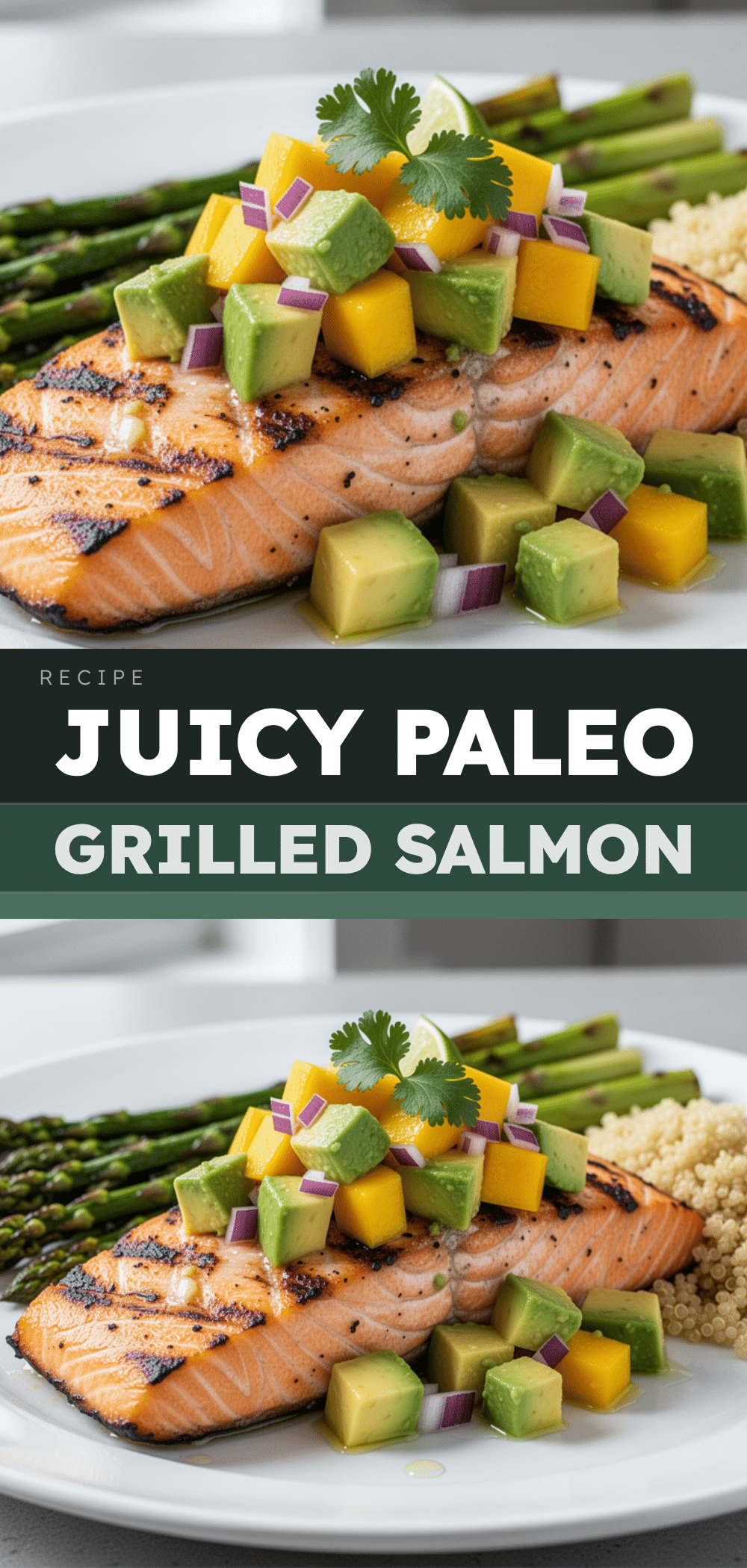
Paleo Grilled Salmon with Mango Avocado Salsa
- Total Time: 20-25 minutes
- Yield: 4 servings 1x
Description
A quick, flavorful, and healthy paleo dinner featuring grilled salmon topped with a fresh, spicy mango avocado salsa. Ready in under 25 minutes.
Ingredients
- 4 salmon fillets (about 6 ounces each)
- 2 tablespoons avocado oil or olive oil
- 1 teaspoon garlic powder
- 1/2 teaspoon onion powder
- 1 teaspoon smoked paprika
- 2 tablespoons lemon juice
- Salt and black pepper to taste
- 2 medium ripe mangoes (about 300g flesh), diced
- 2 large ripe avocados (about 400g flesh), diced
- 1/4 cup red onion, finely diced
- 1/2 cup fresh cilantro, chopped
- 1 small jalapeño, seeded and minced
- 3 tablespoons lime juice
- 1/2 teaspoon sea salt
Instructions
- Pat salmon fillets dry with paper towels. In a small bowl, mix garlic powder, onion powder, smoked paprika, salt, and pepper.
- Drizzle oil over the salmon and rub the spice mix evenly over both sides.
- Dice mango, avocado, and red onion. Mince jalapeño and chop cilantro.
- In a medium bowl, combine mango, avocado, onion, jalapeño, and cilantro. Add lime juice and sea salt, then gently toss to coat without mashing the avocado.
- Preheat grill or skillet to medium-high heat (approx. 400°F / 200°C). Oil the grates or pan.
- Place salmon on the grill, skin-side down. Cook undisturbed for 4-5 minutes until edges are opaque.
- Flip salmon carefully and cook for another 3-4 minutes until internal temperature reaches 140-145°F (63°C) and fish flakes easily.
- Serve salmon immediately, topped generously with the mango avocado salsa.
Notes
Ensure salmon is fully thawed and patted dry before cooking to ensure a good sear. Soak diced red onion in cold water for 10 minutes to reduce harshness. Do not overcook salmon; it continues to cook after being removed from heat. For best results, make salsa fresh just before serving to prevent avocado browning.
- Prep Time: 15 minutes
- Cook Time: 12-15 minutes
- Category: Main Course
- Cuisine: American
Nutrition
- Serving Size: 1 salmon fillet with
- Calories: 450
- Sugar: 10
- Sodium: 300
- Fat: 28
- Saturated Fat: 4
- Carbohydrates: 15
- Fiber: 6
- Protein: 35
Keywords: paleo, grilled salmon, mango avocado salsa, healthy dinner, quick meals, gluten-free, omega-3, keto-friendly


